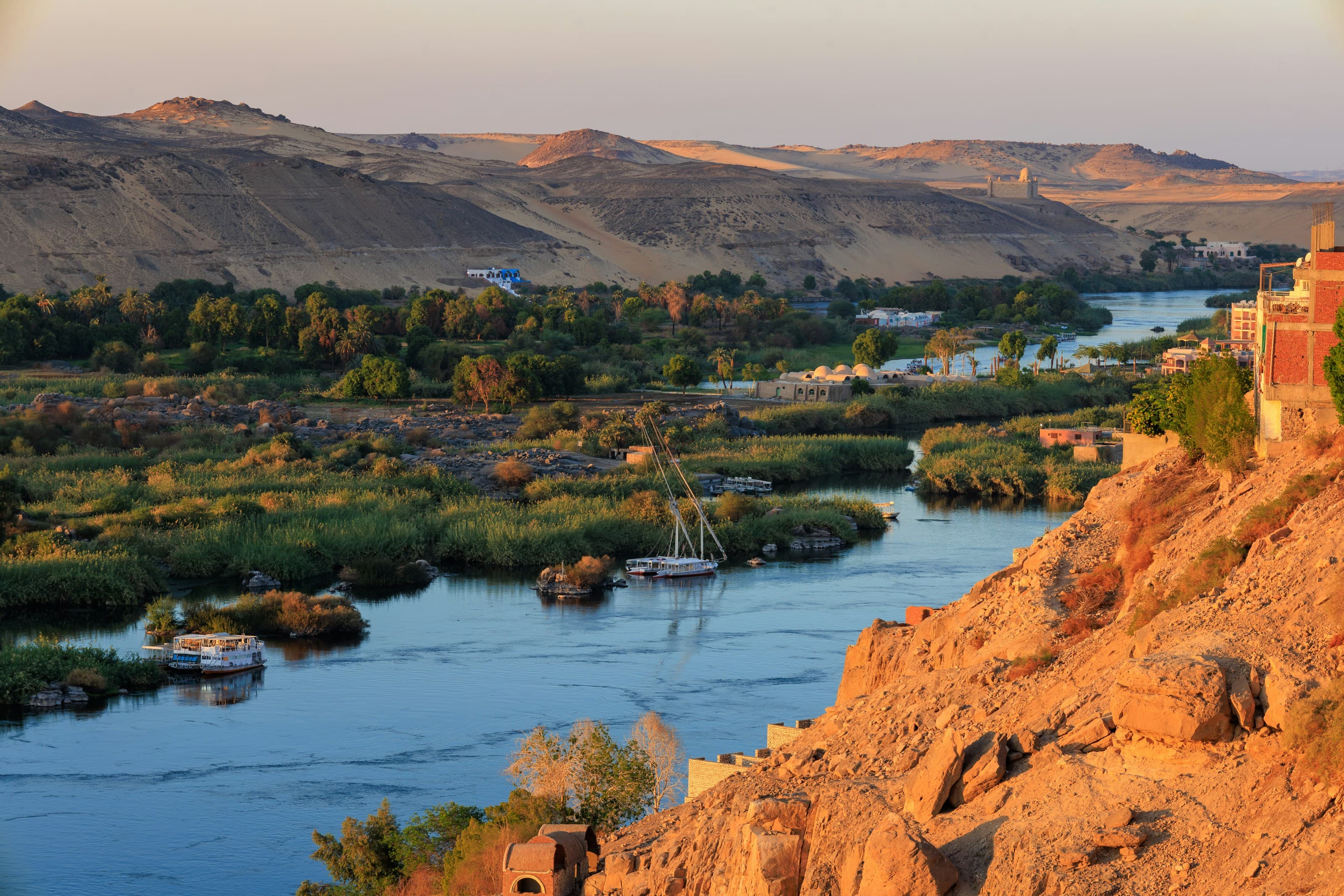
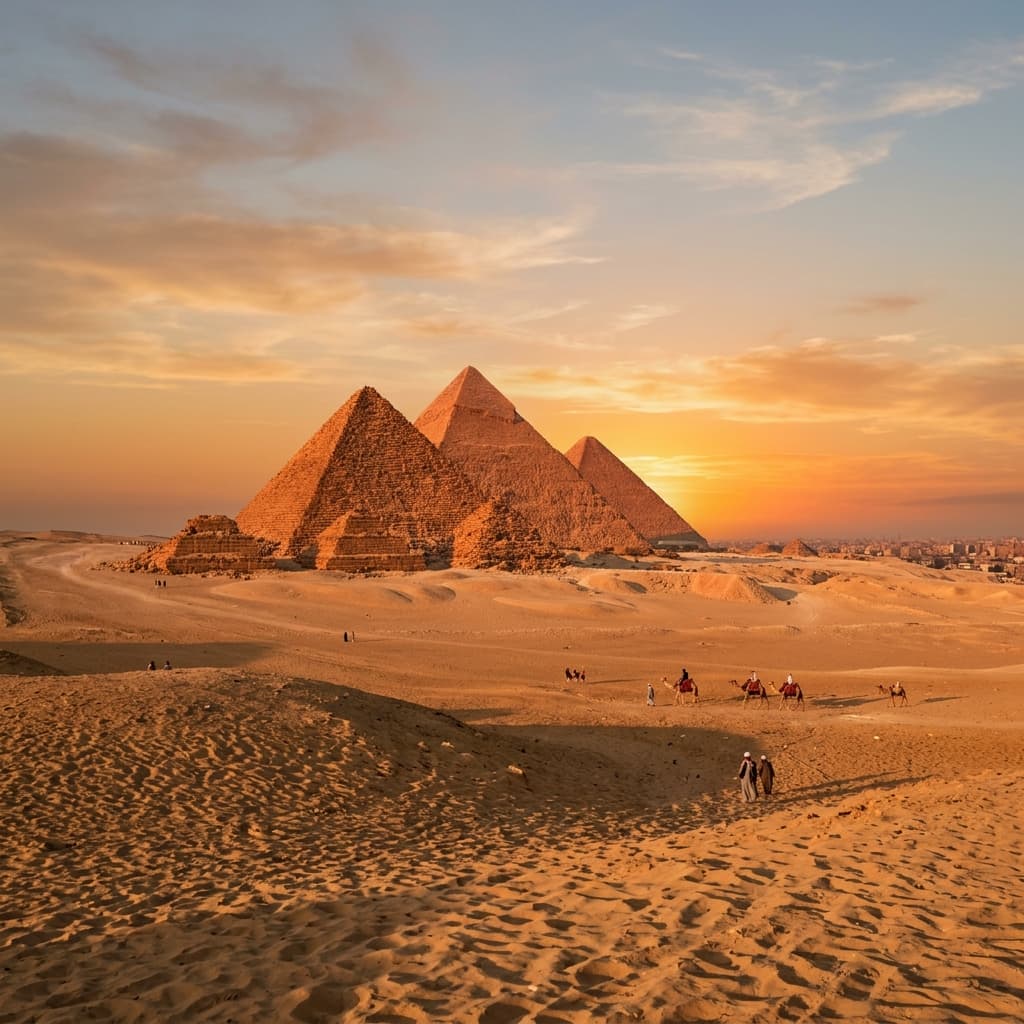
The best time to visit Egypt is October to April. Warm days, cool evenings, no rain worth mentioning, and you can wander around the pyramids at two in the afternoon and still be in a good mood about it. If you want us to narrow it to two months: February and November.
Right, that's the bit you came for. Now let's talk properly.
We get asked this question constantly at ITTAS, and we almost always answer it with a question of our own: what are you coming for?
Because if you're doing Cairo, Luxor and Aswan over ten days, you want a very different month than someone flying straight to Hurghada with a dive bag. And when people tell us "we want cheap, we don't mind the heat," we send them a completely different plan. Honestly? Some of our happiest clients come in June. They just planned around the sun instead of pretending it wasn't there.
So grab a tea. Here's the whole year, the way we'd explain it to you on the phone.
One thing to know before we start
Almost nothing you came to Egypt for has a roof on it.
The pyramids sit on a wide open plateau with no shade anywhere. The Valley of the Kings is a bare limestone bowl that bounces the heat right back up at you. Karnak has all those enormous columns and still, somehow, nowhere useful to stand. And Abu Simbel is out in the Nubian desert, a good three and a half hours south of Aswan.
There's no ducking indoors when it gets much. That one fact is why the calendar matters so much here, and why the advice we give for July looks nothing like the advice we give for January.
Nothing to be scared of. You just want to know it before you book.
October to April, the easy answer
Cairo sits around 20 to 30 °C through these months, with Luxor and Aswan running a bit warmer. It basically doesn't rain. And in winter, around four in the afternoon, the light turns properly golden and every sandstone wall in the country starts showing off.
Everything is running at full tilt too. Cruise boats sailing the complete Luxor to Aswan route, balloons going up over Luxor most mornings, daily flights down to Abu Simbel.
The only catch is that everyone else has worked this out as well. The good cabins and the really good guides get taken months ahead, and late December prices are, well, late December prices.
Now, month by month
January
The coldest month, which mostly means the walking is easy and the light is beautiful. Cairo sits around 19 °C during the day and drops to 8 or 9 at night, and Luxor before sunrise gets genuinely cold.
That last bit catches people out every single year. If you've booked a balloon flight you'll be standing in a dark field on the west bank at five in the morning, and we always see a few visitors turn up in shorts because the forecast promised 23 °C. The forecast meant lunchtime. Please bring a jacket, we're begging you.
Everything else about January is lovely.
February
When someone tells us this is their one and only trip to Egypt and they want it to go perfectly, we say February without hesitating.
Comfortable in Cairo, comfortable all the way down in Aswan, dry, clear, and a little calmer than the New Year rush. It's peak Nile cruise season though, so your wallet will notice.
March
Warm, gorgeous, and the last month where Upper Egypt is genuinely effortless.
Here's a local thing you won't find in most guides: the khamaseen. It's a hot dusty wind that blows off the Western Desert sometime between March and May, and it can turn the sky a strange beige colour for a day. It's not common enough to plan around and most visitors never see it at all, but if you've ever spotted a weirdly hazy photo of the pyramids online, that's usually the culprit.
April
Days get hot inland now, but the evenings are wonderful and the Red Sea has finally warmed up.
April is when the classic Cairo, Luxor and Aswan run pairs beautifully with four or five days of doing absolutely nothing on a beach in Hurghada. A lot of our April trips are exactly that shape, and people come home very relaxed.
Just keep an eye on Easter and Sham El Nessim. Egyptian families travel in huge numbers around then and the Red Sea fills up quickly.
May
This is where the clever travellers find value.
Prices drop, the tour groups thin out, and the heat is completely fine as long as the day is built properly. Out by half six, sightseeing wrapped up by eleven, a long lazy afternoon, then back out in the evening for Karnak or a felucca on the Nile once the air cools down. That's how we run May as standard.
You trade a bit of comfort. You get a quieter country and a smaller bill. For plenty of people that's a very good swap.
June
Upper Egypt gets serious now, past 40 °C most afternoons in Luxor and Aswan.
Cairo is hot but perfectly manageable. Meanwhile the Red Sea flips into its European summer peak, so Hurghada and Sharm fill up while the temples empty out. The complete opposite of winter.
July
The hottest month, and there's no point dressing that up.
But here's the trade. In July you can stand in front of Abu Simbel with nobody else in your photo. No queue for Tutankhamun's tomb. The great hall at Karnak almost silent. Our July travellers send back pictures that our February travellers simply cannot get, because in February there are two hundred people just out of frame.
If you're coming: air conditioning the whole way, a proper hat, more water than seems sensible, and a guide who builds the day around the sun rather than marching through it. Do that and July is genuinely magic.
August
Same story as July for the temples. The coast is a different world though, because European school holidays mean the Red Sea is buzzing, so book your beach hotel early even while inland tourism is at its quietest all year.
Sea temperatures peak this month. Getting into the water at Marsa Alam in August feels a bit like stepping into a bath.
September
This is the one we quietly suggest to people hunting for a deal.
The heat starts backing off in the second half, prices are still at summer level, and the crowds haven't returned yet. Time the last week right and you get October weather at May prices, which is about as good as this calendar gets.
October
The season switches back on and you can feel it in the air. Cruises return to full schedules, the balloons are flying, and full days on your feet are comfortable again.
October is also the month people underestimate when booking. Availability tightens far faster than travellers expect, and we've had more than a few October enquiries where the cabin they had their heart set on went three months earlier.
November
Roughly neck and neck with February, and a few of us here would quietly argue it's better. Warm days, cool evenings, clear skies, everything running smoothly.
Book two to three months ahead, especially for a group or a particular cruise boat.
December
Two completely different months sharing one name.
Early December is one of the best value windows in the entire Egyptian year. Lovely weather, sensible prices, crowds you can live with. Then somewhere around the 20th it all changes at once. Cruises sell out, Cairo hotel rates hit their annual ceiling, Abu Simbel slots disappear.
Same weather. Very different invoice. About ten days apart on the calendar.
The short version, by what you're after
| If you're coming for | Come in |
|---|---|
| Pyramids, Luxor and Aswan | November to March |
| A Nile cruise | October to April, best in November and February |
| Diving and snorkelling | April to June, September to November |
| A balloon over Luxor | October to April |
| The White Desert or Siwa | November to February |
| The lowest price you can find | May, June or September |
| Photography | December to February |
What about Ramadan?
Ramadan shifts about eleven days earlier each year, so it's worth checking against your dates.
We'll be straight with you: it's more atmospheric and slightly less convenient. Some restaurants outside the tourist areas close during daylight, museum hours often get shortened, and Cairo traffic in the hour before iftar is a thing to be experienced rather than described. You really don't want to be crossing the city at six in the evening.
But the sightseeing doesn't get harder, it just shifts. And Islamic Cairo after dark in Ramadan, lanterns strung across the streets and the cafés still full at midnight, is a side of this city that February visitors never get to see. If that sounds better to you than convenience, come. We'll build the timings around it.
The booking side, which most guides skip
The weather decides how your trip feels. Availability decides whether you get the trip at all.
Cruise cabins for December and February go first, usually three to five months out. Abu Simbel runs on a limited set of flights and convoy times, so booking late gets you a worse slot rather than no slot. Balloons cancel for wind now and then, so leave a spare morning in Luxor instead of pinning everything on one attempt. And domestic flights to Luxor and Aswan climb steeply as you get closer in high season.
One more thing, and we mean this sincerely: in Egypt the guide matters more than the hotel. A good Egyptologist changes your entire week. The good ones get booked before the rooms do.
Packing, roughly
October to April. Layers. The gap between a Cairo afternoon and a desert night is wider than the forecast lets on, and January really does need a jacket.
May to September. A hat with an actual brim, strong sunscreen, and electrolyte sachets from any pharmacy here. They cost almost nothing and they help more than you'd think. Loose long sleeves too, which sounds backwards but beats bare arms at Giza every time.
Any month. Something modest for the mosques, shoulders and knees covered, plus a scarf for women at Al-Azhar or Muhammad Ali Mosque. And shoes that can handle a few kilometres of very uneven, very old stone.
Four things we gently talk people out of
Visiting the pyramids at midday. Go at opening instead. By eleven the plateau is busy and there's nowhere to stand out of the sun, in any month of the year.
Writing off summer completely. Summer isn't impossible, it's just a different shape of day. Early start, evening temples, air conditioning in between.
Booking the last ten days of December on impulse. It's the most expensive and most crowded stretch of the year. Early December costs noticeably less for identical weather.
Reading only the daytime forecast in winter. A 20 °C high in Cairo tells you nothing at all about the Western Desert at nine at night.
Questions we get all the time
What's the best month to visit Egypt?
February or November. Comfortable temperatures across Cairo, Luxor and Aswan, no rain, everything open and running.
What's the cheapest time?
June to August for the cultural circuit, with May and September just behind. The heat drives prices down while the sites are at their emptiest.
Is Egypt too hot in summer?
No, but the plan has to change. Sunrise start, finished by late morning, afternoon indoors, evening at somewhere like Karnak or Philae.
Which is the hottest month?
July. Luxor and Aswan regularly go past 40 °C, and Cairo is a few degrees cooler but still hot.
Does it rain in Egypt?
Hardly ever. Cairo sees a handful of rainy days a year, nearly all in winter. Alexandria gets a fair bit more. Luxor and Aswan get almost none at all.
Best month for a Nile cruise?
October through April, with November and February strongest. Book peak-month cabins three to five months ahead.
How many days do I need?
Seven covers Cairo, Luxor and Aswan at a good pace. Ten is comfortable. Fourteen lets you add the Red Sea or Alexandria.
Is Egypt safe?
Yes, on the routes visitors actually travel. Ask us anything before you book — we're happy to walk you through it.
Tell us your dates and we'll take it from there
We build every trip around the month it lands in. A July itinerary and a February itinerary shouldn't look the same, and with us they don't, right down to which sites we save for after sunset.
Send us your dates. We'll tell you honestly whether they're the right ones, and exactly how we'd shape the days if they aren't. No pressure either way, we're happy to just answer the question.
Ask us to plan your trip → · Have a look at our Egypt packages →