El Moez Street - History, Sights and Full Guide
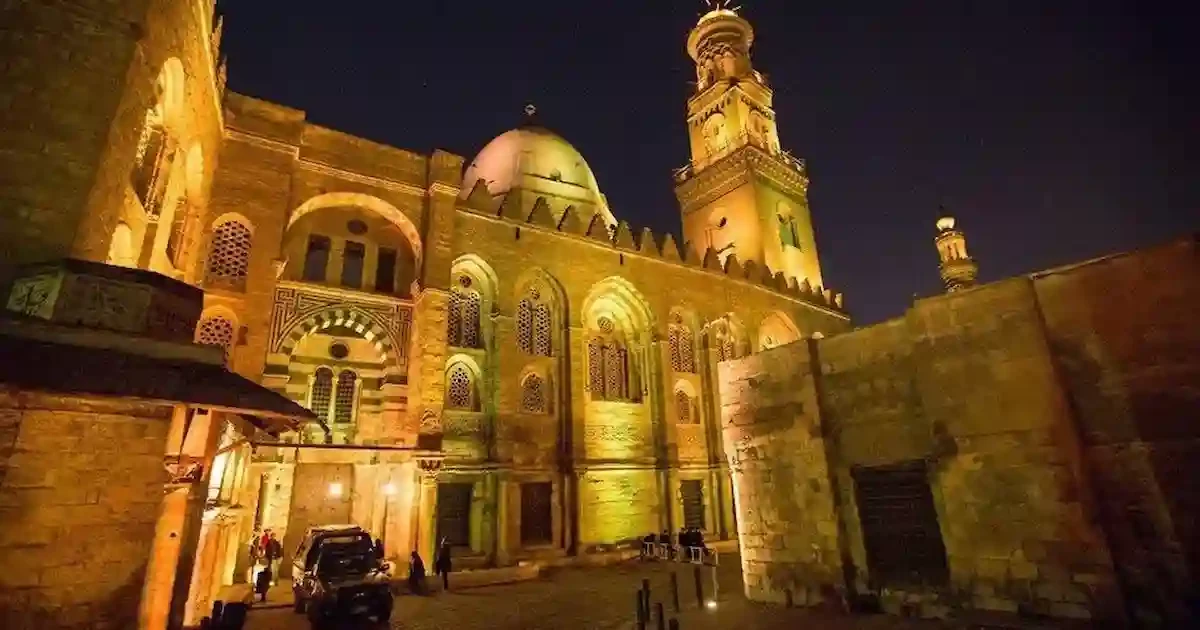
Step onto El Moez Street just after sunset, when the lanterns flicker on and the call to prayer drifts over minarets a thousand years old, and modern Cairo simply falls away.
This single pedestrian street holds one of the densest collections of medieval Islamic architecture anywhere on earth, and walking its length feels less like sightseeing and more like time travel.
Whether you're researching El Moez Street Cairo for a first visit or trying to map out which monuments matter most, this guide covers the history, the sights, and the practical details you'll want before you go.
It's exactly the kind of experience we build into our Cairo Day Tours, for travelers who want the stories behind the stonework, not just a walk-through.
TABLE OF CONTENTS
What Is El Moez Street? Introduction to Cairo's Open-Air Museum
El Moez Street History: From Fatimid Capital to UNESCO Landmark
Founded by Caliph Al-Muizz
A Street Reborn: Restoration and Pedestrianization
Top Landmarks and Monuments Along El Moez Street
Al-Hakim Mosque and Bab al-Futuh
The Qalawun Complex and Bayn al-Qasrayn
Bab Zuweila and the Southern Gate
El Moez Street Shops and Restaurants
El Moez Street Location, Map, and How to Get There
El Moez Street Cairo Opening Hours and Best Time to Visit
Tips for Visiting El Moez Street Old Cairo
What Is El Moez Street? Introduction to Cairo's Open-Air Museum
Officially named Al-Muizz li-Din Allah al-Fatimi Street, El Moez Street stretches roughly one kilometer through the heart of old Cairo, connecting the northern gate of Bab al-Futuh to the southern gate of Bab Zuweila.
Historians and heritage bodies routinely describe it as home to one of the densest concentrations of medieval Islamic monuments anywhere in the world, and once you've walked its length, that description stops sounding like marketing.
Mosques, madrasas, mausoleums, and merchant houses line both sides, spanning the Fatimid, Mamluk, and Ottoman periods almost without interruption.
El Moez Street History: From Fatimid Capital to UNESCO Landmark
Founded by Caliph Al-Muizz
The street's story begins in 969 AD, when the Fatimid general Jawhar al-Siqilli conquered Egypt and founded a new royal capital just northeast of the existing city of Fustat.
The Fatimid Caliph Al-Muizz li-Din Allah gave that new city its name, Al-Qahira, the root of modern "Cairo," and the street running through its center eventually took his name too.
In its earliest form, El Moez Street history is really the history of Cairo itself, serving as the primary axis where the caliph's twin palaces once stood at a site still known as Bayn al-Qasrayn, or "Between the Two Palaces."
A Street Reborn: Restoration and Pedestrianization
Centuries of use left the street crowded with traffic and worn architecture, but a major restoration effort beginning in the late 1990s transformed it into the pedestrian corridor visitors walk today.
That project cleared vehicle access, restored facades, and reintroduced the kind of foot-traffic energy the street would have carried during its medieval heyday.
The entire area now sits within Historic Cairo, a district UNESCO inscribed as a World Heritage Site in 1979 for its exceptional concentration of Islamic-era architecture.
Top Landmarks and Monuments Along El Moez Street
Al-Hakim Mosque and Bab al-Futuh
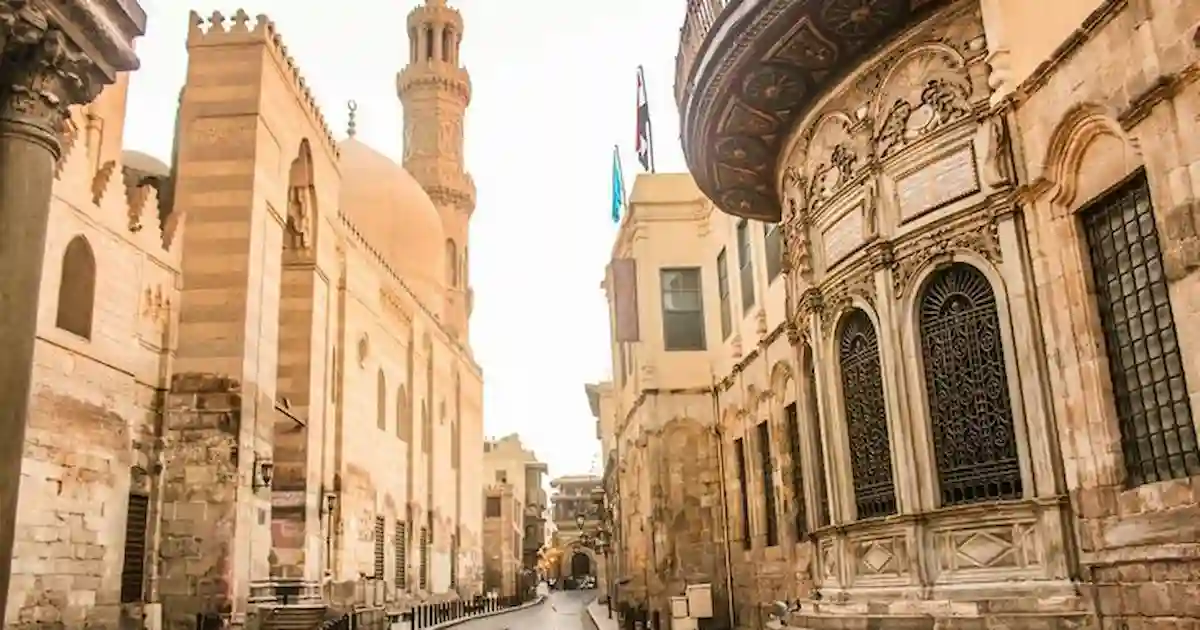
Entering from the north, visitors pass through Bab al-Futuh, one of the original gates in Cairo's medieval walls, before reaching the Mosque of Al-Hakim, among the largest Fatimid-era mosques still standing.
Nearby, the smaller Al-Aqmar Mosque remains one of the best-preserved examples of Fatimid facade design in the city.
The Qalawun Complex and Bayn al-Qasrayn
Further south, the Qalawun complex dominates the streetscape, a combined mausoleum, madrasa, and hospital built by the Mamluk Sultan Qalawun.
Standing beside it, the Al-Nasir Muhammad and Barquq complexes add still more layers of Mamluk architectural ambition, each competing for the most striking minaret or portal along this stretch.
Bab Zuweila and the Southern Gate
The street concludes at Bab Zuweila, the last surviving southern gate of the Fatimid city walls, once used for public executions and, in later centuries, for ceremonial processions.
Climbing its minarets rewards visitors with one of the best rooftop views over Islamic Cairo's skyline.
El Moez Street Shops and Restaurants
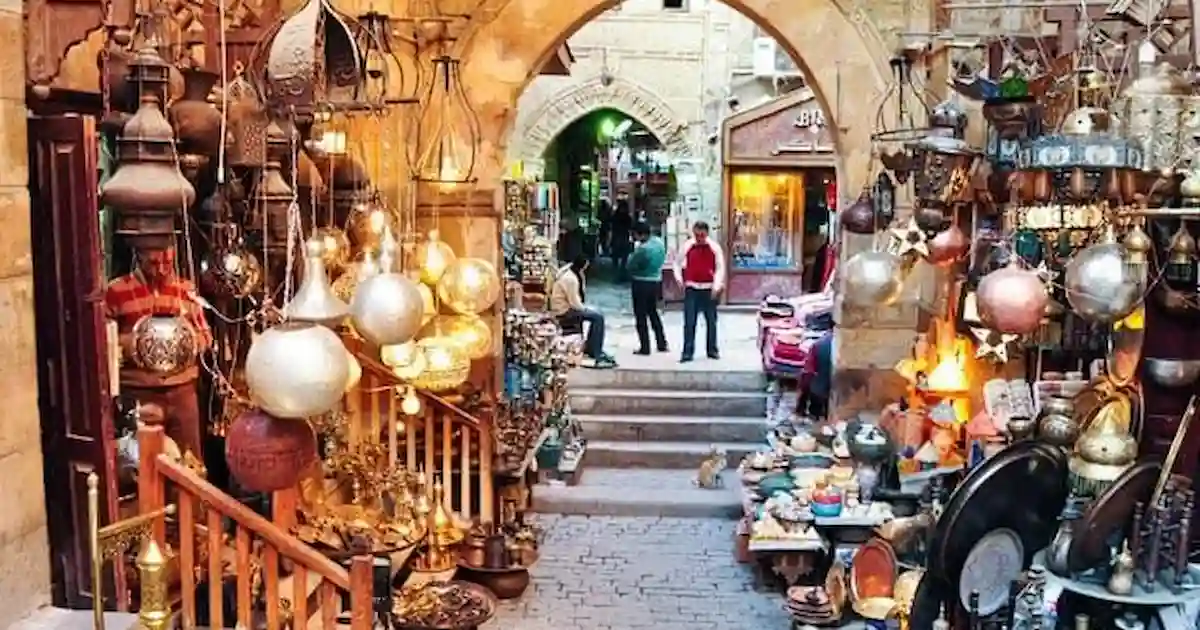
Commerce has never left this street, and El Moez Street shops today sell much of what merchants offered centuries ago, alongside modern souvenirs.
Expect coppersmiths, perfume bottlers, textile weavers, and lantern makers working in small storefronts, many family-run for generations.
Food and drink options cluster more heavily near the southern end, where the street spills into Khan el-Khalili bazaar, and traditional Egyptian cafés serve mint tea and shisha to travelers resting mid-walk.
If you're hunting for El Moez Street restaurants with a view, rooftop spots near Bab Zuweila offer some of the best sightlines over the surrounding minarets.
El Moez Street Location, Map, and How to Get There
El Moez Street sits in the Gamaliya district of old Cairo, within walking distance of Al-Azhar Mosque and Khan el-Khalili. Most visitors arrive by taxi or rideshare to the Al-Hussein or Bab al-Futuh end, since the street itself is pedestrian-only.
For anyone checking an El Moez Street location map before their trip, the simplest reference point is Al-Azhar Street, which runs just south of the pedestrian zone and connects easily to central Cairo.
If door-to-door convenience matters more than navigating on your own, our Egypt Day Tours include transport straight to the entrance.
El Moez Street Cairo Opening Hours and Best Time to Visit
The street itself is open around the clock as a public pedestrian zone, though individual monuments and museums along it keep their own daytime hours, generally from morning until mid-afternoon.
Evenings bring a different atmosphere entirely: shops stay open later, lanterns and streetlights illuminate the facades, and the crowds thin just enough to make photography easier. Many travelers consider early evening, just before and after sunset, the best window for experiencing both the architecture and the street's lively local energy.
Tips for Visiting El Moez Street Old Cairo
Wear comfortable shoes, since the street is cobbled and best explored slowly on foot over an hour or two. Bring small cash for shops and tea stops, as not every vendor accepts cards.
Hiring a local guide adds real value here, since many of the smaller monuments lack posted information and their history isn't obvious from the facade alone.
Finally, visit on a weekday if you can, since weekends bring noticeably heavier foot traffic from both tourists and local families.
El Moez Street - FAQ
Where is El Moez Street located in Cairo?
El Moez Street runs through the Gamaliya district of old Cairo, connecting Bab al-Futuh in the north to Bab Zuweila in the south, close to Al-Azhar Mosque and Khan el-Khalili.
What are the opening hours for El Moez Street?
The street itself stays open as a pedestrian zone at all hours, though the individual mosques and museums along it typically operate during daytime hours only.
What can I buy on El Moez Street?
Shops along the street sell traditional crafts including copperware, perfume, textiles, and handmade lanterns, alongside general souvenirs closer to Khan el-Khalili.
Is El Moez Street worth visiting at night?
Yes, many travelers consider evening the best time to visit, when the lanterns and facade lighting create a completely different atmosphere than a daytime walk.
Do I need a guide to visit El Moez Street?
It isn't required, but a guide adds significant context, since many of the smaller monuments have limited signage. Joining one of our Cairo Day Tours is an easy way to get that context without arranging it yourself.
Conclusion
Few streets anywhere let you walk through a thousand years of history in a single afternoon, but El Moez Street does exactly that.
From Fatimid gates to Mamluk mausoleums to shops still run by the descendants of the merchants who first opened them, this stretch of old Cairo rewards slow, curious exploration.
Whether you come for the architecture, the atmosphere, or the shopping, El Moez Street tends to leave a stronger impression than travelers expect going in.
If you're ready to experience it for yourself, reach out and we'll help you plan a visit that fits the rest of your Cairo
itinerary.