Kalabsha Temple Egypt - History, Facts and Full Guide
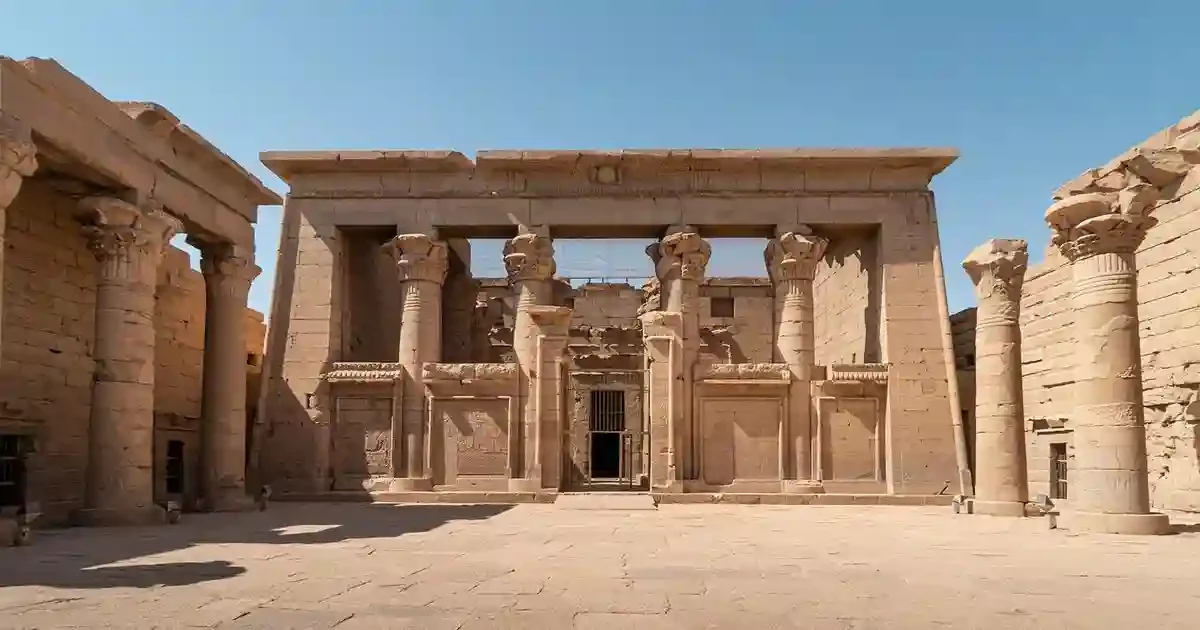
The boat engine cuts out, and for a moment there's only the slap of water against the hull and the sight of sandstone columns rising straight out of Lake Nasser. Most visitors to Aswan never make it here.
That's exactly what makes Kalabsha Temple Egypt worth the extra effort — while crowds cluster around Philae and Abu Simbel, this Roman-era sanctuary sits quietly on its own island, largely undisturbed.
This guide covers everything you need before visiting Kalabsha Temple Aswan Egypt: its layered history, its architecture, its inscriptions, and the practical details of getting there.
If you'd rather have someone else handle the logistics, our Egypt Tour Packages already include stops like this one.
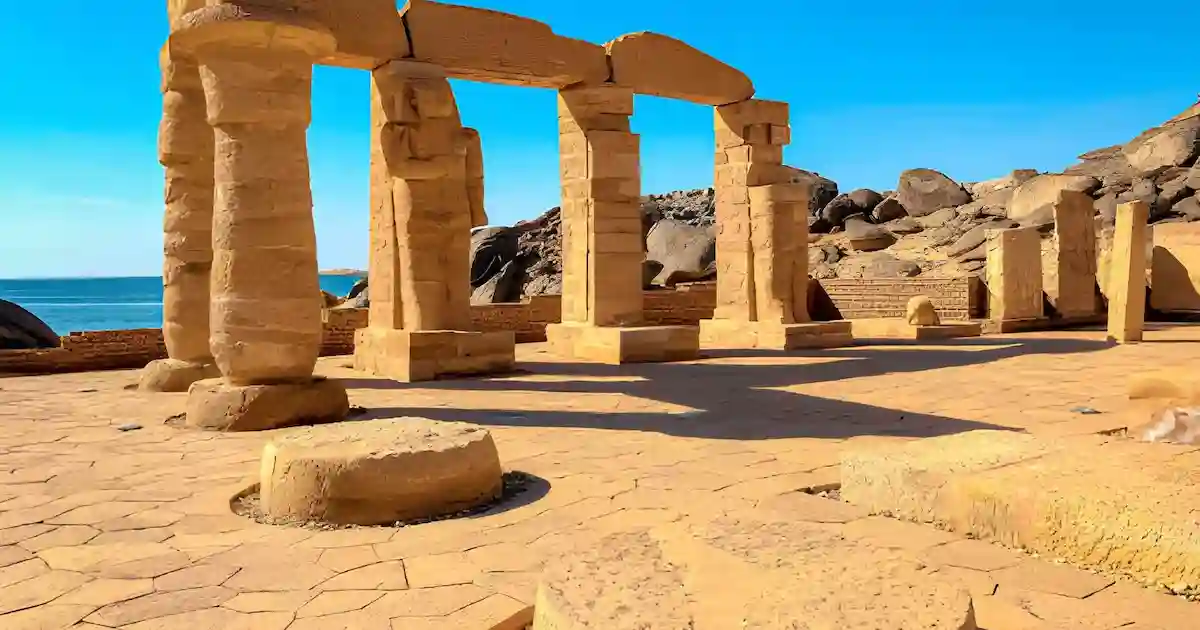
TABLE OF CONTENTS
What Is Kalabsha Temple? An Introduction to Aswan's Hidden Gem
Kalabsha Temple Egypt History: From Roman Sanctuary to Rescued Monument
Built for Mandulis, the Nubian Sun God
The Great Rescue: Saving Kalabsha from Lake Nasser
Kalabsha Temple Egypt Facts You Should Know
Layered Inscriptions Across the Centuries
A Christian Chapter in the Temple's Story
Exploring the Architecture of the Temple of Kalabsha
The Pylon and Open Forecourt
The Hypostyle Hall and Sanctuary
Kalabsha Temple Egypt Location and How to Get There
Kalabsha Temple Egypt Tickets, Opening Hours, and Visitor Tips
Kalabsha Temple vs. Philae and Abu Simbel: Is It Worth Visiting?
What Is Kalabsha Temple? An Introduction to Aswan's Hidden Gem
Kalabsha Temple is the largest free-standing temple in Lower Nubia, and today it stands on New Kalabsha Island, within sight of the Aswan High Dam.
Unlike the temples further south, it wasn't built by pharaohs at the height of Egyptian power.
It was raised under Roman rule, blending Egyptian religious tradition with imperial ambition.
That mix of cultures is part of what makes the temple of Kalabsha in Aswan Egypt so distinctive — it doesn't belong neatly to one era or one civilization.
Kalabsha Temple Egypt History: From Roman Sanctuary to Rescued Monument
Built for Mandulis, the Nubian Sun God
Emperor Augustus commissioned the temple around 30 BC, early in Rome's control over Egypt, dedicating it to Mandulis, a Nubian solar deity closely linked to Horus.
Builders raised it on the site of an earlier sanctuary founded by Amenhotep II centuries before, layering Roman ambition on top of older Egyptian devotion.
Despite its scale, seventy-six meters long and twenty-two meters wide, the temple was never fully completed, and some walls still show unfinished carvings that hint at the labor behind the project.
The Great Rescue: Saving Kalabsha from Lake Nasser
The most dramatic chapter in Kalabsha Temple Egypt history has nothing to do with pharaohs or emperors.
When Egypt began building the Aswan High Dam in the 1960s, engineers realized the rising waters of Lake Nasser would swallow the temple's original site at Bab al-Kalabsha, roughly 50 kilometers south of Aswan.
West Germany stepped in to fund and organize the rescue, and over two painstaking years, crews dismantled the structure into more than 13,000 numbered blocks before reassembling it near the dam.
It remains one of the more ambitious engineering feats connected to the broader International Campaign to Save the Monuments of Nubia, and it's a big reason the temple is inscribed on UNESCO's World Heritage List alongside Abu Simbel and Philae.
Kalabsha Temple Egypt Facts You Should Know
Layered Inscriptions Across the Centuries
The walls preserve records spanning hundreds of years.
One Roman governor's edict, carved directly into the stone, banned pigs from entering the sacred space.
Another inscription, attributed to the fifth-century Nubian king Silko, commemorates his victory over the Blemmyes tribes — a rare firsthand political record from a period with few surviving texts.
A Christian Chapter in the Temple's Story
Centuries after the Romans departed, the temple took on a new role as a Christian church.
Traces of that era survive in faded paintings of saints, including depictions of John the Baptist, layered over the original pharaonic and Roman reliefs.
Few sites in Egypt show this kind of visible religious transition so clearly in a single space.
Exploring the Architecture of the Temple of Kalabsha
The Pylon and Open Forecourt
Visitors approach along a stone causeway leading to a monumental pylon gateway, the traditional entrance format for Egyptian temples.
Beyond it opens a columned forecourt, where sunlight and shadow shift dramatically across the carved surfaces throughout the day.
The Hypostyle Hall and Sanctuary
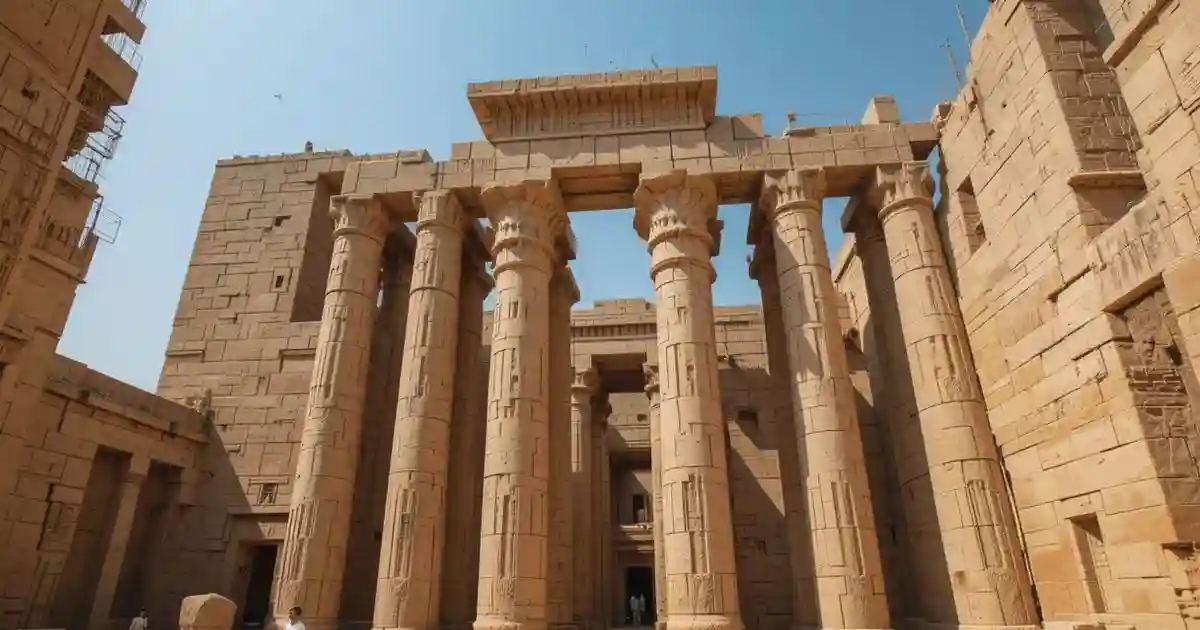
Eight columns support the hypostyle hall, their capitals and shafts covered in reliefs of Egyptian gods rendered in a distinctly Greco-Roman style.
From the inner sanctuary, a narrow staircase climbs to the roof, opening onto a view of Lake Nasser that makes the temple's remote, rescued existence feel entirely worth it.
Kalabsha Temple Egypt Location and How to Get There
The temple now sits on New Kalabsha Island, just south of the Aswan High Dam, a short boat ride from the mainland rather than a road trip.
Most travelers arrange transport through a local guide or tour operator, since public access typically involves negotiating a boat crossing near the dam.
Because the island also holds other relocated Nubian structures, including the Beit al-Wali chapel and the Kalabsha gate, a single visit often covers several sites at once.
If you'd rather skip the negotiating and just show up, our Aswan Day Tours already handle the boat crossing and guide. Many visitors also combine the trip with a wider look at Lake Nasser, and our Nile Cruises are a natural way to fold Kalabsha into a longer Upper Egypt itinerary.
Kalabsha Temple Egypt Tickets, Opening Hours, and Visitor Tips
Tickets are purchased on-site or arranged in advance through a tour operator, and prices are modest compared to headline attractions like Abu Simbel.
Because the temple sees relatively few visitors, opening hours can be less rigid than at major sites, so it's worth confirming current timing locally or through your guide before setting out.
Bring cash in small denominations for boat transport, wear comfortable shoes for the causeway and rooftop stairs, and go early in the day if you want the site mostly to yourself.
Kalabsha Temple vs. Philae and Abu Simbel: Is It Worth Visiting?
Philae dazzles with its island setting and evening light show, and Abu Simbel overwhelms with sheer scale.
Kalabsha offers something different: quiet, uncrowded access to a temple that tells a genuinely unusual story, from Roman emperors to Nubian kings to Christian monks. If you have time for only one Aswan temple, Philae or Abu Simbel may win out.
If you want a deeper, less touristy layer added to your trip, Kalabsha earns its place on the itinerary.
Kalabsha Temple Egypt - FAQ
Where is Kalabsha Temple located in Egypt?
Kalabsha Temple now stands on New Kalabsha Island, just south of the Aswan High Dam, after being relocated from its original site roughly 50 kilometers further south.
How do I get to Kalabsha Temple from Aswan?
Most visitors reach the temple by a short boat crossing near the High Dam, arranged either independently or through a local guide.
Combining it with a broader itinerary, such as our Nile Cruises, often simplifies the logistics.
Who was Kalabsha Temple built for?
The temple was dedicated to Mandulis, a Nubian sun god closely associated with Horus, and was commissioned under the Roman emperor Augustus around 30 BC.
Is Kalabsha Temple worth visiting compared to Philae or Abu Simbel?
It depends on what you're after. Kalabsha won't match the grandeur of Abu Simbel, but its quieter atmosphere and layered history make it a rewarding stop for travelers who enjoy discovering lesser-known sites.
What should I know before buying Kalabsha Temple tickets?
Tickets are typically purchased at the site or bundled into a guided tour, and prices are lower than at major landmarks. Since access requires a boat crossing, it's best to confirm timing and transport details in advance.
Conclusion
Kalabsha Temple rewards travelers willing to step off the well-worn Aswan trail.
Its Roman origins, dramatic 1960s rescue, and centuries of shifting religious use make it far more than a footnote beside Philae and Abu Simbel.
Standing on its rooftop, with Lake Nasser stretching out in every direction, it's easy to appreciate why so much effort went into saving it.
As Aswan continues to draw travelers seeking depth over crowds, Kalabsha Temple Egypt is likely to earn a bigger place on more itineraries.
Ready to see it for yourself? Reach out and we'll help you build a trip that includes this remarkable site.