Facts About Abu Simbel Temple - 15 Fascinating
The first glimpse of Abu Simbel is unforgettable.
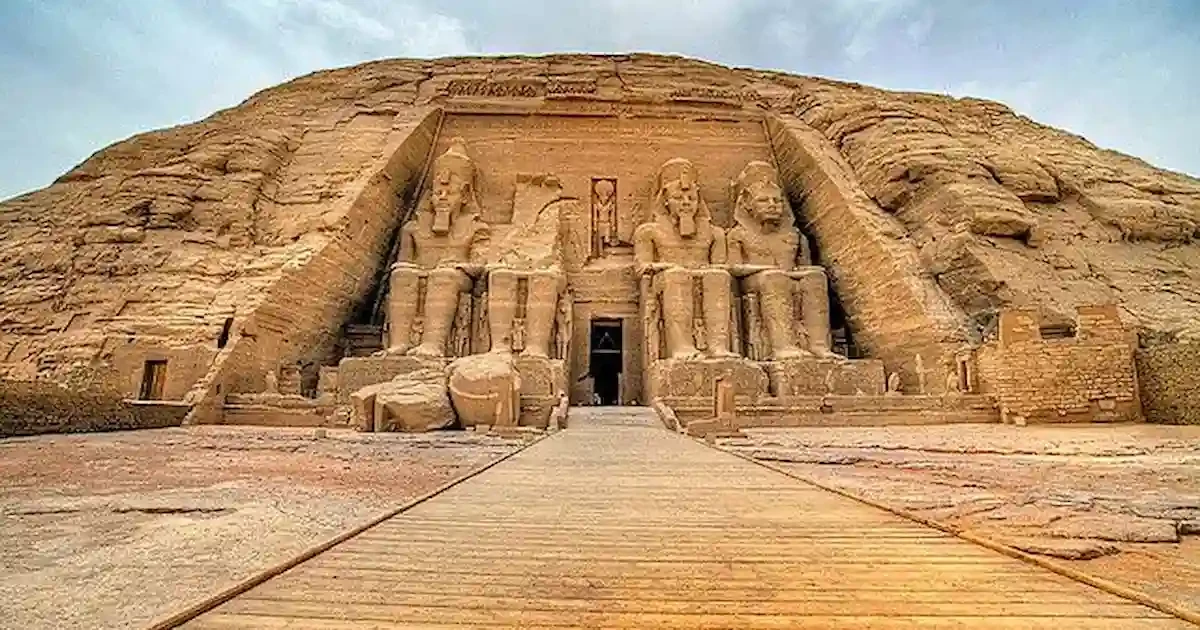
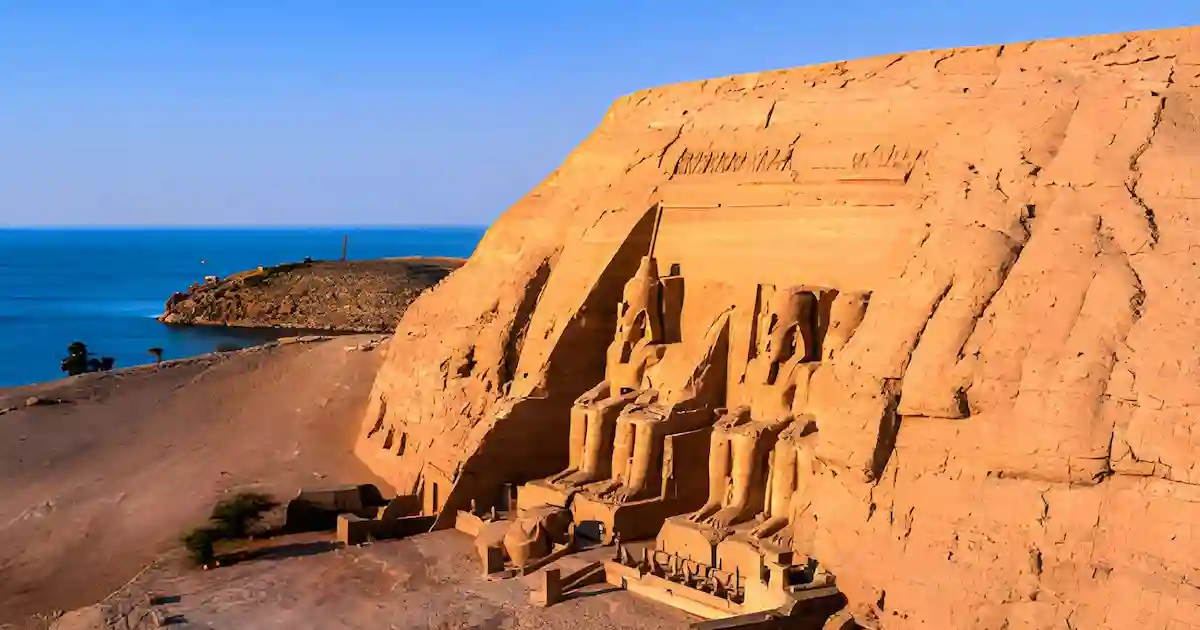
Rising dramatically from the golden cliffs beside the tranquil waters of Lake Nasser, four colossal statues of Pharaoh Ramesses II appear almost larger than life.
Long before you reach the entrance, you begin to understand why travelers from around the world consider this one of Egypt's greatest treasures.
These Facts About Abu Simbel Temple reveal far more than impressive architecture.
They tell the story of royal ambition, remarkable engineering, ancient astronomy, and one of the most extraordinary preservation projects in modern history.
Whether you're planning your first visit or simply fascinated by ancient Egypt, discovering these Facts About Abu Simbel Temple will deepen your appreciation for this UNESCO World Heritage masterpiece.
Many visitors include Abu Simbel as part of their Egypt Tour Packages, while others experience it during luxurious Nile Cruises or dedicated Aswan Day Tours. However you choose to visit, understanding its remarkable past transforms the experience from sightseeing into a true journey through history.
In this guide, you'll discover 15 fascinating facts about Abu Simbel, learn why it remains one of Egypt's most important monuments, and find practical travel tips to help you make the most of your visit.
Table of Contents
An Introduction to Abu Simbel Temple
Why the temple is world-famous
The vision of Ramesses II
Facts 1–8 About Abu Simbel Temple
Facts 9–15 About Abu Simbel Temple
Why Abu Simbel Is One of Egypt's Most Important Ancient Sites
How to Visit Abu Simbel
Best time to visit
Travel options
Helpful tips
An Introduction to Abu Simbel Temple
Few monuments capture the imagination quite like Abu Simbel.
Carved directly into a sandstone mountainside in southern Egypt, the twin temples stand as remarkable reminders of the ambition, artistry, and engineering skills of the ancient Egyptians.
For many travelers, learning the facts about Abu Simbel Temple begins with one simple question: Why is this site so famous?
The answer lies in its extraordinary combination of history, architecture, and survival.
A Monument Built to Inspire
The Great Temple was commissioned by Pharaoh Ramesses II during the height of the New Kingdom.
Construction began around the 13th century BC, making it more than 3,200 years old.
Those wondering when was the Abu Simbel Temple built are often surprised by just how ancient the monument truly is.
Rather than constructing a freestanding temple, Egyptian craftsmen carved the entire sanctuary directly into a solid sandstone cliff overlooking the Nile.
The result remains breathtaking today.
Four seated statues of Ramesses II, each standing approximately 20 meters (66 feet) high, guard the entrance with remarkable precision.
Even after thousands of years, their expressions and intricate carvings continue to impress visitors from around the globe.
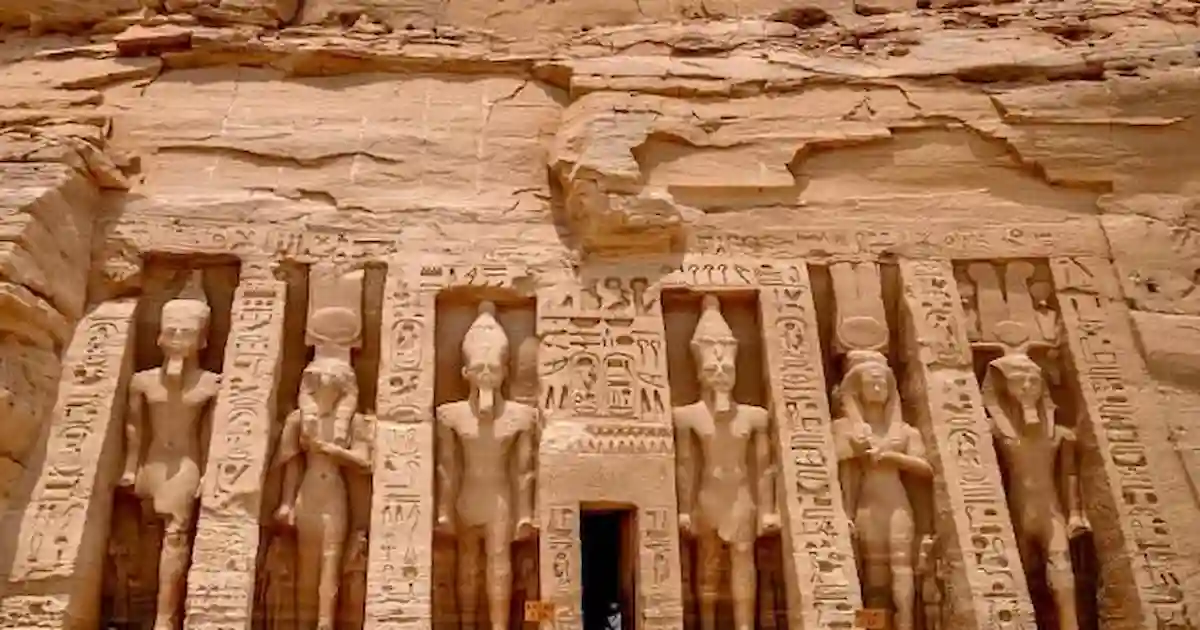
The neighboring Small Temple, dedicated to Queen Nefertari and the goddess Hathor, is equally remarkable.
It represents one of the rare occasions in ancient Egyptian art where a queen is depicted on the same monumental scale as the pharaoh.
More Than Beautiful Architecture
Although the colossal statues are its most recognizable feature, Abu Simbel represents much more than artistic achievement.
It symbolized:
Royal authority.
Military power.
Religious devotion.
Egyptian engineering excellence.
The divine status of Ramesses II.
The temple also served a political purpose.
Situated near Egypt's southern frontier, it demonstrated the strength of the pharaoh to neighboring Nubian populations while celebrating his victories and reinforcing Egypt's influence in the region.
This explains why is the Abu Simbel Temple important not only to historians but also to anyone interested in understanding ancient Egyptian civilization.
A Story of Survival
One of the most remarkable facts about the Abu Simbel temples has nothing to do with their original construction.
During the 1960s, the creation of the Aswan High Dam threatened to submerge the temples beneath the rising waters of Lake Nasser.
Instead of allowing this irreplaceable treasure to disappear forever, an international rescue mission led by UNESCO carefully dismantled the temples into massive stone blocks, moved them to higher ground, and reconstructed them almost exactly as they had originally stood.
This extraordinary Abu Simbel relocation remains one of the greatest archaeological preservation achievements in history.
Today, millions of visitors admire the temples without realizing that they stand approximately 65 meters higher than their original location.
In the next section, we'll explore the first eight fascinating facts that make Abu Simbel one of the world's most extraordinary archaeological sites, from its colossal statues and solar alignment to the remarkable engineering hidden behind its timeless beauty.
Facts 1–8 About Abu Simbel Temple
The deeper you explore Abu Simbel, the more remarkable it becomes.
Beyond its colossal statues lies a fascinating story of engineering, astronomy, royal ambition, and cultural significance. These first eight facts reveal why the temple continues to amaze historians, archaeologists, and travelers alike.
Fact 1: Abu Simbel Was Built by Ramesses II
One of the most well-known facts about Abu Simbel Temple is that it was commissioned by Pharaoh Ramesses II, one of ancient Egypt's greatest rulers.
Construction began around 1264 BC and continued for approximately twenty years.
Ramesses II ordered the temple to celebrate his victories, honor the gods, and reinforce Egypt's influence along its southern frontier.
His reign produced more monuments than almost any other pharaoh, but Abu Simbel remains his greatest architectural masterpiece.
Fact 2: The Temple Was Carved Directly into a Mountain
Unlike many Egyptian temples assembled from enormous stone blocks, Abu Simbel was excavated directly into a sandstone cliff.
Rather than transporting thousands of stones across long distances, ancient craftsmen carefully removed the rock until magnificent halls, columns, statues, and sanctuaries gradually emerged from the mountainside itself.
This extraordinary achievement demonstrates the remarkable precision of ancient Egyptian engineers over three thousand years ago.
Fact 3: Four Colossal Statues Guard the Entrance
Perhaps the most recognizable feature among the facts about the temples of Abu Simbel is the temple's monumental entrance.
Four seated statues of Ramesses II dominate the façade.
Each statue stands approximately 20 meters (66 feet) tall, making them among the largest royal sculptures ever created in ancient Egypt.
Although one statue partially collapsed during an earthquake in antiquity, its fallen fragments remain at the temple entrance, preserving an authentic piece of history.
Fact 4: The Temple Honors Both the Pharaoh and the Gods
Abu Simbel was never intended solely as a monument to Ramesses II.
The temple was dedicated to several important deities, including:
Amun-Ra
Ra-Horakhty
Ptah
The deified Ramesses II himself
This unique combination illustrates how Egyptian kingship intertwined with religion, presenting the pharaoh as both ruler and divine figure.
Fact 5: The Sun Illuminates the Sanctuary Twice Each Year
One of the most extraordinary 15 interesting facts about Abu Simbel Temple involves its incredible astronomical alignment.
Twice every year—traditionally around 22 February and 22 October—the rising sun shines deep into the temple's inner sanctuary.
Its rays illuminate the statues of:
Amun-Ra
Ramesses II
Ra-Horakhty
Remarkably, the statue of Ptah, associated with the underworld, remains in shadow.
This breathtaking phenomenon reflects the Egyptians' sophisticated understanding of astronomy and architectural planning.
Visitors who witness the Abu Simbel Sun Festival often describe it as one of the most unforgettable experiences in Egypt.
Fact 6: Queen Nefertari Received Her Own Temple
Adjacent to the Great Temple stands the smaller but equally beautiful Temple of Hathor and Nefertari.
This temple is especially significant because Queen Nefertari's statues are carved at nearly the same height as those of Ramesses II.
In ancient Egyptian art, queens were rarely depicted on such an equal scale with the reigning pharaoh, highlighting the exceptional respect Ramesses held for his beloved wife.
Fact 7: Abu Simbel Was Hidden Beneath Sand for Centuries
After the decline of ancient Egyptian civilization, drifting desert sands gradually buried much of the temples.
By the early nineteenth century, only the upper portions of the colossal statues remained visible.
In 1813, Swiss explorer Johann Ludwig Burckhardt first recorded the site, and a few years later, Italian explorer Giovanni Belzoni helped uncover the entrance.
This rediscovery returned one of Egypt's greatest monuments to the world after centuries of silence beneath the desert.
Fact 8: The Entire Temple Was Relocated
Perhaps the most astonishing of all the facts about Abu Simbel temples is that the monument visitors see today is no longer standing in its original location.
During the construction of the Aswan High Dam in the 1960s, rising waters threatened to permanently flood the temples.
An unprecedented international campaign organized by UNESCO carefully dismantled Abu Simbel into more than 1,000 massive stone blocks, each weighing several tons.
The temple was then reconstructed approximately 65 meters higher and about 200 meters inland, preserving its appearance, orientation, and even its famous solar alignment.
The Abu Simbel relocation remains one of the greatest archaeological rescue operations ever undertaken and stands as a remarkable example of global cooperation to protect humanity's shared cultural heritage.
Facts 9–15 About Abu Simbel Temple
The story of Abu Simbel extends far beyond its impressive façade.
The final seven facts reveal why this extraordinary monument continues to inspire millions of visitors and remains one of Egypt's most treasured historical sites.
Fact 9: Abu Simbel Is a UNESCO World Heritage Site
In 1979, Abu Simbel became part of the UNESCO World Heritage Site of the Nubian Monuments, recognizing its outstanding cultural and historical importance.
This designation protects the temples for future generations while highlighting their significance as masterpieces of ancient engineering and art.
Today, they are considered among the finest surviving examples of New Kingdom architecture.
Fact 10: The Original Location Was on the Banks of the Nile
Many travelers ask, where was Abu Simbel originally located?
Before the relocation project, the temples stood directly beside the Nile River in Lower Nubia. The creation of Lake Nasser after the construction of the Aswan High Dam submerged the original site, making the relocation essential for their survival.
Although the surroundings have changed, the temples retain their original orientation and grandeur.
Fact 11: The Interior Is Filled with Remarkable Reliefs
Stepping inside Abu Simbel reveals beautifully carved halls supported by towering Osirid pillars—statues of Ramesses II depicted as the god Osiris.
The walls are covered with detailed reliefs illustrating:
Military victories, including the Battle of Kadesh.
Religious ceremonies and offerings.
Royal processions.
Scenes honoring Egypt's principal gods.
These carvings provide invaluable insight into the political and religious life of ancient Egypt.
Fact 12: The Temple Was Designed to Impress Egypt's Southern Neighbors
Abu Simbel's location near Egypt's southern frontier was no accident.
Positioned close to Nubia, the temples served as a powerful statement of Egypt's strength and the authority of Ramesses II.
Their monumental scale was intended to impress visitors, allies, and potential rivals alike, reinforcing the pharaoh's reputation throughout the region.
Fact 13: Abu Simbel Is One of Egypt's Most Photographed Landmarks
Whether viewed at sunrise, sunset, or beneath a brilliant blue sky, Abu Simbel offers unforgettable photographic opportunities.
The symmetry of the colossal statues, the warm sandstone colors, and the reflection of nearby Lake Nasser create breathtaking scenes that have become iconic images of Egypt.
Many luxury Nile Cruises and Aswan Day Tours schedule visits during the early morning hours when the light is especially beautiful and the temperatures are more comfortable.
Fact 14: Visiting Abu Simbel Is Easier Than Ever
Although the temples lie approximately 280 kilometers south of Aswan, modern transportation makes them surprisingly accessible.
Travelers can reach Abu Simbel by:
Domestic flight from Aswan.
Organized coach excursion.
Private vehicle with a guide.
Selected luxury tour itineraries.
Many visitors include the temples as part of comprehensive Egypt Tour Packages, combining them with Aswan, Luxor, and a Nile cruise for a complete exploration of Upper Egypt.
Fact 15: Abu Simbel Continues to Inspire the World
Among all 15 facts about Abu Simbel, perhaps the most remarkable is its enduring ability to inspire.
For more than three millennia, the temples have survived earthquakes, shifting sands, changing civilizations, and even relocation on an extraordinary scale.
Today, they stand not only as monuments to the vision of Ramesses II but also as symbols of international cooperation and cultural preservation.
Whether you're drawn by history, architecture, photography, or adventure, Abu Simbel remains one of those rare places that consistently exceeds expectations.
It is a destination that leaves visitors with a profound appreciation for the ingenuity of ancient Egypt and the importance of protecting its timeless treasures.
Why Abu Simbel Is One of Egypt's Most Important Ancient Sites
There are countless temples scattered across Egypt, yet Abu Simbel occupies a place all its own.
While Karnak impresses with its vast columns and Luxor Temple shines with centuries of layered history, Abu Simbel captures the imagination through its dramatic setting, colossal scale, and extraordinary story of survival.
For many travelers, visiting Abu Simbel is more than another stop on an itinerary—it is a journey into the ambition, creativity, and enduring legacy of ancient Egypt.
A Masterpiece of Ancient Engineering
One of the reasons why is the Abu Simbel Temple important is the remarkable level of engineering required to create it.
More than 3,200 years ago, Egyptian craftsmen transformed a sandstone cliff into two monumental temples with astonishing precision.
Every chamber, column, statue, and inscription was carefully planned to create a harmonious blend of architecture, religion, and royal propaganda.
The temple's famous solar alignment remains one of its greatest achievements.
Twice each year, sunlight travels through the entrance and reaches the sanctuary deep inside the mountain, illuminating three of the four seated statues while leaving Ptah, the god associated with the underworld, in shadow.
This extraordinary phenomenon continues to fascinate archaeologists and visitors alike, demonstrating the advanced astronomical knowledge of ancient Egyptian builders.
A Symbol of International Cooperation
Abu Simbel is not only celebrated for its ancient origins but also for its remarkable modern history.
During the 1960s, the construction of the Aswan High Dam threatened to submerge the temples beneath the waters of the newly formed Lake Nasser.
Rather than allowing one of humanity's greatest cultural treasures to disappear, UNESCO launched an unprecedented international rescue campaign.
Engineers carefully cut the temples into more than a thousand precisely numbered stone blocks, transported them to higher ground, and reconstructed them with extraordinary accuracy.
This ambitious Abu Simbel relocation became one of the most successful archaeological preservation projects ever undertaken.
It also demonstrated how nations could work together to protect the world's shared cultural heritage.
Today, Abu Simbel is recognized as part of the UNESCO World Heritage Site of the Nubian Monuments, ensuring that future generations can continue to admire its beauty and historical significance.
An Unforgettable Experience for Modern Travelers
Abu Simbel offers far more than historical knowledge—it creates lasting memories.
Standing before the colossal statues of Ramesses II, visitors often feel humbled by their immense scale. Inside the temple, the quiet atmosphere invites reflection as sunlight filters across ancient carvings that have survived for millennia.
The surrounding landscape adds to the experience. The deep blue waters of Lake Nasser contrast beautifully with the golden sandstone cliffs, creating one of the most photogenic settings in Egypt.
For luxury travelers, Abu Simbel combines perfectly with elegant Nile Cruises, allowing guests to experience Egypt at a relaxed pace while enjoying exceptional service and expertly guided excursions.
Travelers staying in Aswan can also join professionally organized Aswan Day Tours, making it possible to explore the temples comfortably in a single day.
Whether you're passionate about archaeology, photography, or simply discovering remarkable places, Abu Simbel consistently ranks among the highlights of any Egyptian journey.
How to Visit Abu Simbel – Travel Tips & Best Experiences
A visit to Abu Simbel requires a little planning, but the reward is well worth the effort.
Thanks to modern transportation and well-organized excursions, reaching this remote archaeological masterpiece is easier than ever.
Where Is the Abu Simbel Temple Located?
One of the most common questions travelers ask is, where is the Abu Simbel Temple located?
The temples stand in southern Egypt, approximately 280 kilometers (174 miles) southwest of Aswan, near the shores of Lake Nasser and close to the Sudanese border.
Although the original site was beside the Nile River, the relocation project placed the temples on higher ground overlooking the lake while preserving their original orientation.
Despite the distance from Cairo and Luxor, Abu Simbel is one of Egypt's most accessible remote monuments thanks to excellent road connections and domestic flights.
Best Ways to Reach Abu Simbel
Visitors have several convenient travel options:
Private guided excursion: Ideal for travelers seeking flexibility and personalized commentary.
Organized Aswan Day Tours: A popular and hassle-free choice that includes transportation and an expert guide.
Domestic flights: The fastest option for those with limited time.
Luxury Egypt Tour Packages: Many multi-day itineraries include Abu Simbel alongside Cairo, Luxor, Aswan, and a Nile cruise.
If you're planning an extended holiday, combining Abu Simbel with one of our Egypt Tour Packages offers the most seamless and enriching experience.
The Best Time to Visit
The cooler months, from October to April, provide the most pleasant weather for exploring Abu Simbel.
To avoid the strongest midday heat, many tours depart from Aswan before sunrise, allowing visitors to arrive early in the morning. This not only offers more comfortable temperatures but also provides soft natural light for photography before larger crowds gather.
For an even more memorable experience, consider visiting during the famous Sun Festival in February or October, when the temple's remarkable solar alignment attracts visitors from around the world.
Helpful Tips for Your Visit
To make the most of your time at Abu Simbel:
Wear lightweight, breathable clothing and comfortable walking shoes.
Bring sunscreen, sunglasses, and a wide-brimmed hat.
Carry water, especially during warmer months.
Arrive early for the best lighting and fewer crowds.
Take time to explore both the Great Temple of Ramesses II and the Small Temple of Nefertari.
Before your visit, it's also worth reading about the temple's history through trusted resources such as UNESCO and Wikipedia.
Understanding the monument's construction, symbolism, and remarkable rescue operation will make your visit even more rewarding.
Abu Simbel is one of those rare destinations that lives up to every expectation.
Whether you arrive by road, air, or as part of a luxury Nile journey, the sight of its colossal statues rising from the desert is an experience you'll remember long after your travels through Egypt have ended.
Conclusion
The Facts About Abu Simbel Temple reveal why this extraordinary monument continues to captivate travelers more than 3,000 years after it was carved into the sandstone cliffs of southern Egypt.
From the colossal statues of Ramesses II and the remarkable solar alignment to the incredible UNESCO-led relocation, every detail reflects the ingenuity, ambition, and artistic brilliance of ancient Egyptian civilization.
Whether you're fascinated by history, architecture, archaeology, or simply searching for unforgettable travel experiences, Abu Simbel offers something truly unique.
Its breathtaking setting beside Lake Nasser and its powerful connection to Egypt's past make it one of the country's most rewarding destinations.
If you're planning your Egyptian adventure, consider including Abu Simbel in one of our Egypt Tour Packages, experience the beauty of Upper Egypt on our Nile Cruises, or enjoy a professionally guided visit through our Aswan Day Tours. Discovering these Facts About Abu Simbel Temple before your journey will help you appreciate every carving, every statue, and every story behind one of the world's greatest archaeological treasures.
Facts About Abu Simbel Temple - FAQ
When was the Abu Simbel Temple built?
The Great Temple of Abu Simbel was commissioned by Pharaoh Ramesses II around 1264 BC during Egypt's New Kingdom and took approximately 20 years to complete.
It remains one of the finest examples of ancient Egyptian rock-cut architecture.
Why is the Abu Simbel Temple important?
Many travelers ask, why is the Abu Simbel Temple important? It is significant because of its colossal statues, remarkable engineering, solar alignment phenomenon, and the international UNESCO campaign that relocated the entire temple to protect it from flooding after the construction of the Aswan High Dam.
Where is the Abu Simbel Temple located?
If you're wondering where is the Abu Simbel Temple located, it stands near Lake Nasser, about 280 kilometers southwest of Aswan in southern Egypt.
The temple is easily reached by road, domestic flight, or as part of organized Aswan Day Tours.
Where was Abu Simbel originally located?
Before the UNESCO rescue project, the temples stood on the original banks of the Nile River in Lower Nubia. During the famous Abu Simbel relocation in the 1960s, they were carefully moved approximately 65 meters higher and 200 meters inland to protect them from the rising waters of Lake Nasser.
Can I visit Abu Simbel on a day trip?
Yes. Abu Simbel is one of the most popular excursions from Aswan.
Many travelers choose guided Aswan Day Tours, while others include the temples within comprehensive Egypt Tour Packages or luxury Nile Cruises, making it easy to experience this UNESCO World Heritage Site with expert guides.