Symbol of Divine Authority in Hieroglyphics Explained
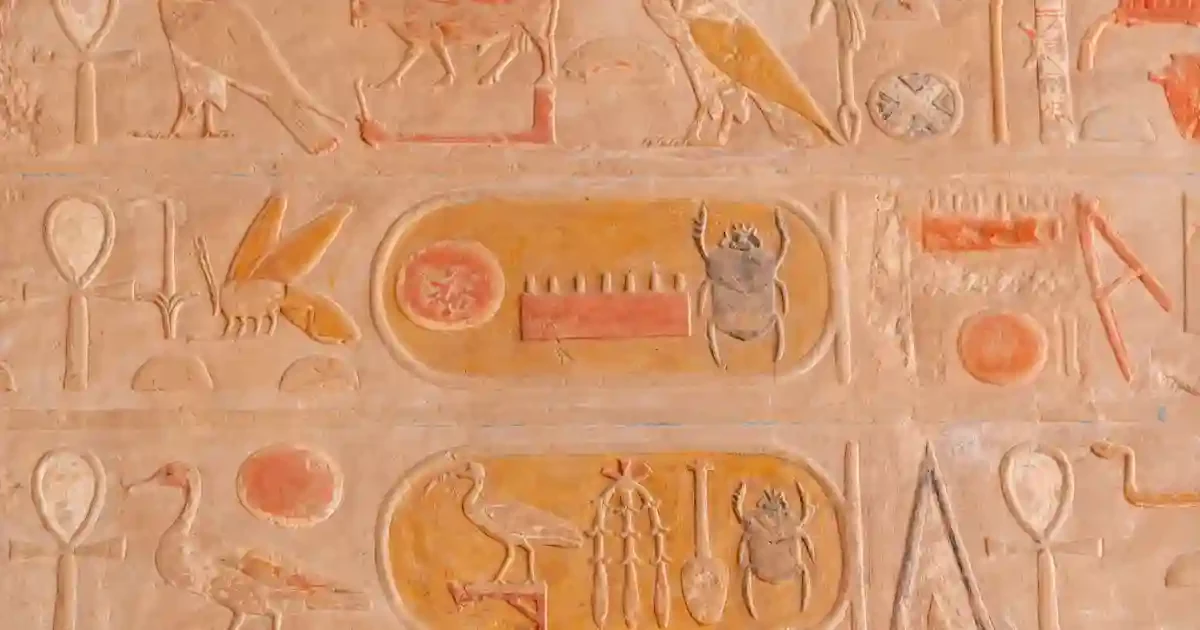
The first thing many travelers notice inside an ancient Egyptian temple isn't the towering columns or the colossal statues—it's the walls.
Every inch is covered with beautifully carved hieroglyphs that seem to whisper stories from another world.
Hidden among these intricate carvings is the Symbol of Divine Authority in Hieroglyphics, a powerful reminder that religion, kingship, and daily life were inseparable in ancient Egypt.
Understanding the Symbol of Divine Authority in Hieroglyphics transforms an ordinary visit into an unforgettable journey through history.
Instead of seeing decorative carvings, you'll recognize messages about power, protection, eternity, and the sacred relationship between the gods and the pharaohs.
Whether you're preparing for one of our Egypt Tour Packages, planning luxurious Nile Cruises, or exploring our guide to the Ancient Egyptian Gods, learning these ancient symbols will deepen your appreciation of every temple and monument you visit.
In this guide, we'll explore the origins, meanings, historical importance, and artistic beauty behind Egypt's sacred symbols while showing why they continue to fascinate travelers thousands of years later.
Table of Contents
What Is the Symbol of Divine Authority in Hieroglyphics?
Why symbols mattered in ancient Egypt
Hieroglyphics as sacred writing
The Most Important Symbols of Divine Authority
The Ankh
The Was Scepter
The Djed Pillar
The Crook and Flail
How Hieroglyphics Expressed Royal and Divine Power
Pharaohs and the gods
Temple inscriptions
Where Travelers Can See These Symbols Today
Karnak Temple
Luxor Temple
Abu Simbel
Philae Temple
Why Ancient Egyptian Symbols Still Matter Today
Cultural legacy
Travel experiences
What Is the Symbol of Divine Authority in Hieroglyphics?
Few ancient writing systems are as instantly recognizable as Egyptian hieroglyphics.
Their elegant combination of people, animals, sacred objects, and geometric shapes continues to inspire curiosity among historians and travelers alike. Yet these carvings were never created simply for decoration.
Every symbol carried meaning, and many represented the authority of the gods themselves.
Hieroglyphics Were More Than Writing
Modern alphabets communicate sounds, but Egyptian hieroglyphics communicated ideas, beliefs, and spiritual concepts simultaneously.
Many inscriptions combined phonetic characters with symbolic images that conveyed religious meaning.
This unique system allowed ancient Egyptians to express complex ideas about kingship, creation, life after death, and divine protection in a visually powerful way.
The symbol of divine authority in hieroglyphics meaning therefore extends beyond language. These sacred signs served as visual expressions of the cosmic order that governed the universe.
When priests carved temple walls or decorated royal tombs, they believed the inscriptions possessed spiritual power. Writing itself was considered a divine act, protected by Thoth, the god of wisdom and writing.
This explains why hieroglyphics appear almost everywhere inside Egypt's great monuments—from towering entrance pylons to hidden burial chambers deep beneath the desert.
Divine Authority and the Pharaoh
In ancient Egypt, religion and government were inseparable.
The pharaoh was not merely a political ruler but the earthly representative of the gods.
His authority came directly from the divine realm, and hieroglyphic symbols constantly reinforced this sacred relationship.
Among the most recognizable ancient egyptian hieroglyphs symbols connected to royal authority were the Ankh, the Was Scepter, the Djed Pillar, and the royal cartouche.
Together, they communicated ideas of eternal life, strength, stability, and legitimate rule.
Visitors walking through Karnak Temple or Luxor Temple often notice these symbols repeated countless times beside the names of kings and gods.
Far from being repetitive decoration, they proclaimed the pharaoh's role as guardian of Ma'at—the universal principle of truth, justice, and harmony.
Understanding these symbols transforms every relief into a story.
A carved scepter no longer appears as a simple staff, and an Ankh becomes much more than a decorative cross. Each image reflects centuries of belief, ritual, and political power.
For travelers preparing to explore Egypt, learning about egyptian hieroglyphs meaning and symbols before arriving makes every temple visit more engaging.
The monuments begin to read like illustrated history books, revealing the beliefs that shaped one of the world's greatest civilizations.
In the next section, we'll take a closer look at the most important symbols of divine authority, uncovering the fascinating meanings behind the sacred images that still captivate visitors today.
The Most Important Symbols of Divine Authority
Walk through any ancient Egyptian temple, and you'll quickly notice that certain symbols appear again and again.
They are carved into towering columns, painted across temple ceilings, engraved on royal statues, and even held in the hands of gods and pharaohs.
These were not decorative motifs.
Each represented a different aspect of divine authority and conveyed messages that every ancient Egyptian would have understood.
Learning to recognize these sacred images allows modern travelers to appreciate Egyptian monuments on a much deeper level.
What first appears to be beautiful artwork soon becomes a sophisticated visual language telling stories of creation, kingship, protection, and eternal life.
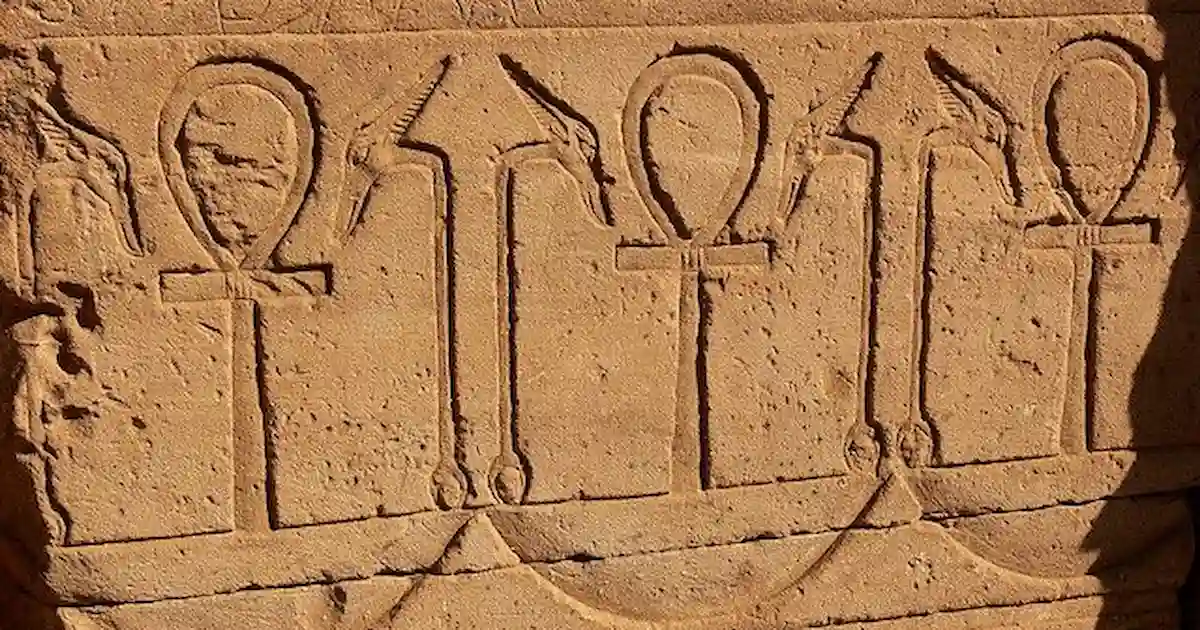
The Ankh – The Key of Life
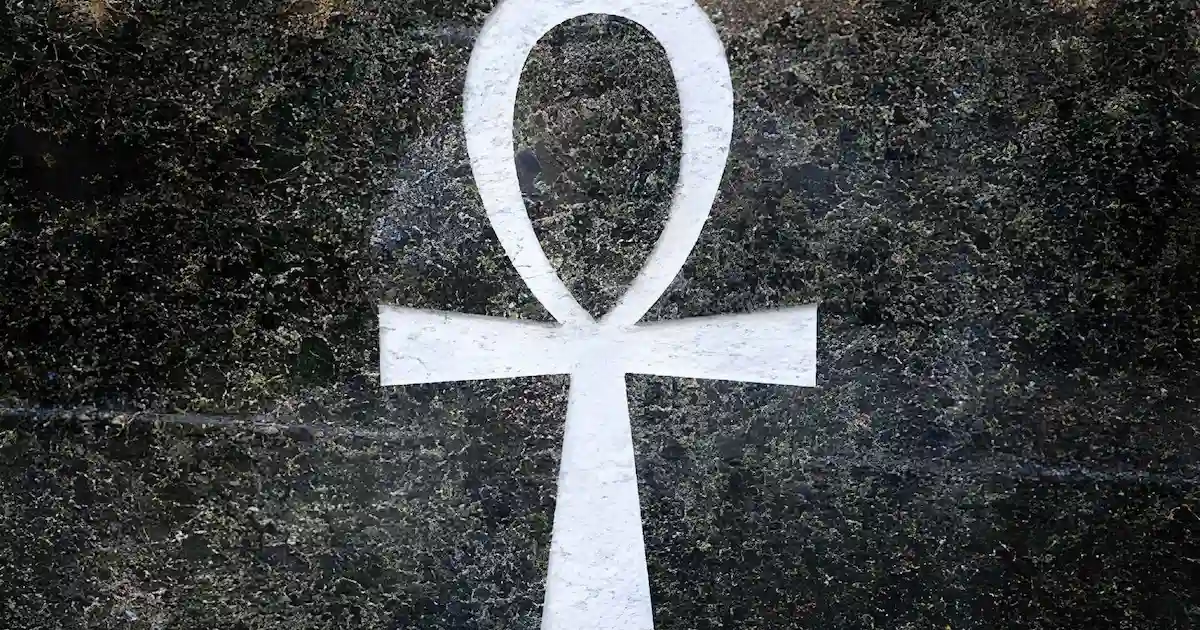
Among all egyptian symbols name lists, none is more recognizable than the Ankh.
Often called the "Key of Life," the Ankh resembles a cross with a loop at the top.
It symbolized eternal life, divine blessing, and the life-giving power of the gods.
Temple reliefs frequently show deities holding the Ankh to the nose of a pharaoh, representing the gift of breath and everlasting life.
Because it embodied the sacred bond between humanity and the divine, the Ankh became one of the most enduring examples of the symbol of divine authority in hieroglyphics.
It reminded Egyptians that true life originated from the gods and that the ruler governed with divine approval.
Today, visitors can spot Ankhs throughout Karnak, Luxor Temple, Philae, and many exhibits in the Egyptian Museum.
The Was Scepter – Power and Dominion
Another unmistakable emblem is the Was Scepter, a long staff topped with the head of a mythical animal and ending in a forked base.
The Was Scepter represented:
Authority
Strength
Stability
Dominion over chaos
Gods such as Ra, Amun, and Osiris are frequently shown carrying this staff, emphasizing their command over both the natural and supernatural worlds.
Pharaohs also appear with the Was Scepter to reinforce their divine right to rule.
For historians, it remains one of the clearest examples of how ancient egyptian hieroglyphs symbols communicated political and religious authority simultaneously.
The Djed Pillar – Stability and Endurance
The Djed Pillar is one of Egypt's oldest sacred symbols.
Resembling a tall column with several horizontal bars near the top, it symbolized stability, permanence, and resilience.
Closely associated with Osiris, the god of the afterlife, the Djed represented the enduring nature of creation and the hope of renewal after death.
During important religious festivals, priests performed ceremonies in which the Djed Pillar was ceremonially raised, signifying the restoration of order and the triumph of life over disorder.
For modern travelers, this symbol often appears alongside other sacred emblems in temple reliefs, adding another layer of meaning to scenes of worship and royal ceremony.
The Crook and Flail – Symbols of Kingship
Perhaps no objects better illustrate royal authority than the crook and flail.
Originally agricultural tools, they evolved into powerful symbols carried across the chest of the pharaoh.
The crook represented guidance and protection, while the flail symbolized leadership, justice, and the responsibility to provide for the people.
Together, they conveyed the ideal qualities of a ruler—strength balanced with compassion.
One of the most famous examples can be seen on the golden funerary mask of Tutankhamun, where the young king holds both emblems across his chest.
This iconic image has become synonymous with ancient Egyptian royalty.
These symbols remind us that divine authority in Egypt was never based solely on power.
It was rooted in responsibility, harmony, and the belief that the ruler served as the link between humanity and the gods.
As you travel through Egypt, whether on expertly guided Egypt Tour Packages or relaxing aboard elegant Nile Cruises, recognizing these sacred symbols transforms every temple wall into a fascinating visual narrative.
Instead of seeing isolated carvings, you'll begin to understand the sophisticated language that connected religion, kingship, and everyday life for more than three millennia.
How Hieroglyphics Expressed Royal and Divine Power
Egyptian hieroglyphics were much more than an ancient writing system—they were a visual expression of authority. Every inscription carved into stone served a purpose, reinforcing the divine status of the gods, celebrating the achievements of the pharaohs, or preserving sacred knowledge for future generations.
Pharaohs as the Chosen of the Gods
Ancient Egyptians believed the pharaoh ruled by divine appointment.
He was not considered a god during his lifetime in every period, but he was seen as the intermediary between the gods and humanity.
Hieroglyphic inscriptions consistently portrayed the king standing before deities, presenting offerings, receiving blessings, or participating in sacred rituals.
These scenes emphasized that his authority was granted—and continually renewed—by the divine.
Royal names were enclosed within a cartouche, an oval-shaped frame symbolizing protection and eternal rule.
Whenever visitors notice these distinctive oval inscriptions carved on temple walls, they are looking at one of the clearest visual declarations of kingship in ancient Egypt.
Temples as Sacred Storybooks
The walls of Egypt's temples were designed to educate, inspire, and preserve history.
Rather than displaying random images, every relief followed a carefully planned narrative.
Priests, artists, and scribes worked together to depict important religious ceremonies, victories in battle, offerings to the gods, and scenes that reinforced the concept of Ma'at—the universal order that sustained the world.
For example:
At Karnak Temple, inscriptions celebrate the power of Amun-Ra and the legitimacy of New Kingdom pharaohs.
At Luxor Temple, reliefs depict royal coronations and divine birth scenes.
At Abu Simbel, colossal carvings proclaim the strength of Ramesses II while emphasizing his close relationship with the gods.
These monuments reveal why understanding egyptian hieroglyphs meaning and symbols is so rewarding.
Every symbol, gesture, and inscription contributes to a larger story about faith, leadership, and civilization.
Travelers interested in exploring these remarkable sites often find that combining historical reading with visits to the monuments themselves creates a much richer experience.
Before your journey, our guide to the Ancient Egyptian Gods provides valuable context for understanding the deities featured throughout Egypt's temples.
For readers seeking additional historical background, the UNESCO World Heritage Centre offers detailed information about Egypt's most significant archaeological sites, while Wikipedia's guide to Egyptian hieroglyphs provides an accessible overview of the writing system and its development.
In the next section, we'll visit the extraordinary temples where these symbols can still be admired today, bringing ancient beliefs vividly to life for modern travelers.
Where Travelers Can See These Symbols Today
Reading about ancient Egyptian symbols is fascinating, but nothing compares to standing before the monuments where they were first carved more than 3,000 years ago.
The scale of Egypt's temples, combined with the extraordinary detail of their hieroglyphic inscriptions, creates an experience that no photograph can fully capture.
As sunlight moves across the sandstone walls, carvings that once appeared decorative begin to reveal their true purpose.
Every Ankh, Was Scepter, Djed Pillar, and royal cartouche tells part of a much larger story about divine authority, kingship, and the eternal relationship between humanity and the gods.
Whether you're visiting Egypt for the first time or returning to discover new archaeological treasures, these remarkable sites offer the best opportunity to see the Symbol of Divine Authority in Hieroglyphics in its original setting.
Karnak Temple – A Living Encyclopedia of Sacred Symbols
Located in Luxor, Karnak Temple is one of the largest religious complexes ever built.
For nearly 2,000 years, successive pharaohs expanded this magnificent sanctuary, filling it with colossal columns, towering obelisks, sacred lakes, and thousands of hieroglyphic inscriptions.
As you walk through the famous Great Hypostyle Hall, you'll notice countless representations of divine authority:
Ankhs presented to the king by the gods
Was Scepters held by Amun and Ra
Cartouches bearing the names of famous pharaohs
Solar symbols celebrating divine creation
The sheer scale of the carvings makes Karnak an ideal place to understand how hieroglyphics combined language, religion, and political authority.
Luxor Temple – Where Kingship Became Sacred
Just a short distance from Karnak stands Luxor Temple, another masterpiece of ancient Egyptian architecture.
Unlike many temples dedicated primarily to a single god, Luxor Temple emphasized the divine nature of kingship itself.
Its reliefs celebrate coronations, royal ceremonies, and festivals that reaffirmed the pharaoh's role as the earthly representative of the gods.
Visitors who have learned the symbol of divine authority in hieroglyphics meaning often find themselves recognizing familiar symbols throughout the temple.
Every carved scene reinforces the belief that maintaining harmony on Earth depended upon cooperation between the king and the divine realm.
The temple becomes less of a ruin and more of an open-air history book.
Abu Simbel – Monument to Royal Power
Few places demonstrate divine authority more dramatically than Abu Simbel.
Commissioned by Ramesses II during the 13th century BC, the temple's colossal statues dominate the landscape long before visitors reach the entrance.
Inside, beautifully preserved reliefs depict the king standing alongside the gods, receiving blessings and demonstrating his sacred authority.
Twice each year, sunlight penetrates deep into the sanctuary to illuminate the statues of the gods and Ramesses himself—a remarkable achievement that reflects the Egyptians' advanced understanding of astronomy and architecture.
This extraordinary alignment reminds visitors that symbolism in ancient Egypt extended far beyond hieroglyphics. Entire temples were designed to express cosmic order.
Philae Temple – A Masterpiece of Sacred Symbolism
Situated on an island in the Nile near Aswan, Philae Temple offers one of Egypt's most picturesque settings.
Dedicated primarily to Isis, the temple contains exceptionally well-preserved carvings that showcase many ancient egyptian hieroglyphs symbols.
Scenes depict divine ceremonies, sacred offerings, and royal rituals, all accompanied by intricate hieroglyphic inscriptions that celebrate both religious devotion and legitimate rule.
Arriving at Philae by boat creates an unforgettable experience.
As the temple gradually appears above the water, it's easy to understand why ancient Egyptians regarded this island as a place of profound spiritual significance.
Many luxury Nile Cruises include Philae as a highlight, allowing travelers to experience its beauty while sailing along the same river that sustained Egyptian civilization for millennia.
Why Ancient Egyptian Symbols Still Matter Today
Although thousands of years have passed since hieroglyphics were used in daily life, their influence remains remarkably strong.
Ancient Egyptian symbols continue to inspire artists, historians, architects, jewelry designers, and travelers around the world.
More importantly, they remind us that civilizations communicate not only through words but also through images, ideas, and enduring cultural traditions.
Symbols That Continue to Inspire
The Ankh, Eye of Horus, Was Scepter, and Djed Pillar are now recognized far beyond Egypt's borders.
They appear in:
Museum collections
Academic research
Modern jewelry
Interior design
Literature
Films and documentaries
Educational resources about ancient history
This lasting popularity reflects the universal themes these symbols represent—life, protection, wisdom, justice, resilience, and hope.
For many visitors, learning about these images before arriving in Egypt transforms the journey into something far more personal.
Rather than simply admiring ancient monuments, they begin to understand the beliefs and values that shaped one of history's greatest civilizations.
Making Your Journey Through Egypt More Meaningful
One of the greatest rewards of travel is seeing familiar places through new eyes.
After understanding the Symbol of Divine Authority in Hieroglyphics, you'll notice details that many visitors overlook:
The Ankh held gently by a goddess.
The Was Scepter grasped by a powerful deity.
A royal cartouche carved high above a temple entrance.
The Djed Pillar symbolizing eternal stability.
These seemingly small discoveries create unforgettable moments.
Instead of asking, "What does this picture show?" you'll begin asking, "What story is this symbol telling?"
That shift in perspective is what makes cultural travel so rewarding.
If you're planning to explore Egypt's ancient wonders, consider combining visits to Luxor, Aswan, Abu Simbel, and Cairo through carefully designed Egypt Tour Packages.
Pairing these experiences with luxurious Nile Cruises offers the perfect balance of historical discovery and modern comfort.
Before your journey, exploring our guide to the Ancient Egyptian Gods will help you recognize the deities, myths, and sacred symbols you'll encounter throughout Egypt's temples and museums.
By understanding the language of hieroglyphics, every carved wall becomes more than an archaeological treasure—it becomes a timeless conversation between the ancient world and today's curious traveler.
Conclusion
The Symbol of Divine Authority in Hieroglyphics represents far more than an artistic element carved into ancient stone.
It reflects the beliefs, values, and political ideals that shaped one of the world's most remarkable civilizations.
From the life-giving Ankh and the powerful Was Scepter to the enduring Djed Pillar and the royal cartouche, each symbol tells a story of divine protection, legitimate rule, and the pursuit of Ma'at—the harmony that ancient Egyptians believed sustained the universe.
For modern travelers, recognizing these sacred symbols transforms every visit to Egypt's temples and monuments. Hieroglyphics become more than an undeciphered script; they become a visual language that reveals the relationship between the gods, the pharaohs, and the people who built this extraordinary civilization.
If you're ready to experience these timeless symbols firsthand, explore our Egypt Tour Packages, enjoy the elegance of our Nile Cruises, and discover the fascinating stories behind the Ancient Egyptian Gods.
Understanding the Symbol of Divine Authority in Hieroglyphics will enrich every step of your journey through Egypt and allow you to see its ancient wonders through the eyes of the civilization that created them.
Symbol of Divine Authority in Hieroglyphics - FAQ
What is the Symbol of Divine Authority in Hieroglyphics?
The Symbol of Divine Authority in Hieroglyphics refers to sacred signs used to represent royal power, divine protection, and the authority of the gods.
The most famous examples include the Ankh, Was Scepter, Djed Pillar, and the royal cartouche, all of which appear frequently in temples and tombs throughout ancient Egypt.
Which symbol represented divine power in ancient Egypt?
Several symbols represented divine power, but the Was Scepter was one of the strongest emblems of authority and dominion.
The Ankh symbolized eternal life, while the Djed Pillar represented stability and endurance. Together, these ancient Egyptian hieroglyphs symbols expressed the connection between the gods and the pharaoh.
Where can I see these hieroglyphic symbols in Egypt?
Many of Egypt's most famous archaeological sites preserve these symbols in remarkable detail.
Karnak Temple, Luxor Temple, Philae Temple, Abu Simbel, and the Valley of the Kings all feature beautifully carved hieroglyphic inscriptions.
Many of our Nile Cruises include guided visits to these iconic locations.
Why are Egyptian hieroglyphic symbols important today?
Hieroglyphic symbols continue to help historians understand ancient Egyptian religion, politics, and daily life.
They also inspire modern art, architecture, and design while offering travelers a deeper appreciation of Egypt's cultural heritage.
Learning about egyptian hieroglyphs meaning and symbols before your trip makes every temple visit more meaningful.
What is the best way to learn about Egyptian symbols before visiting Egypt?
Reading reliable historical resources and traveling with knowledgeable guides is the best approach.
Our articles about the Ancient Egyptian Gods provide helpful background, while our Egypt Tour Packages include expert-guided visits to temples where these symbols can be seen in their original context.