Beautiful Hathor Goddess - Myths, Powers, and Temples
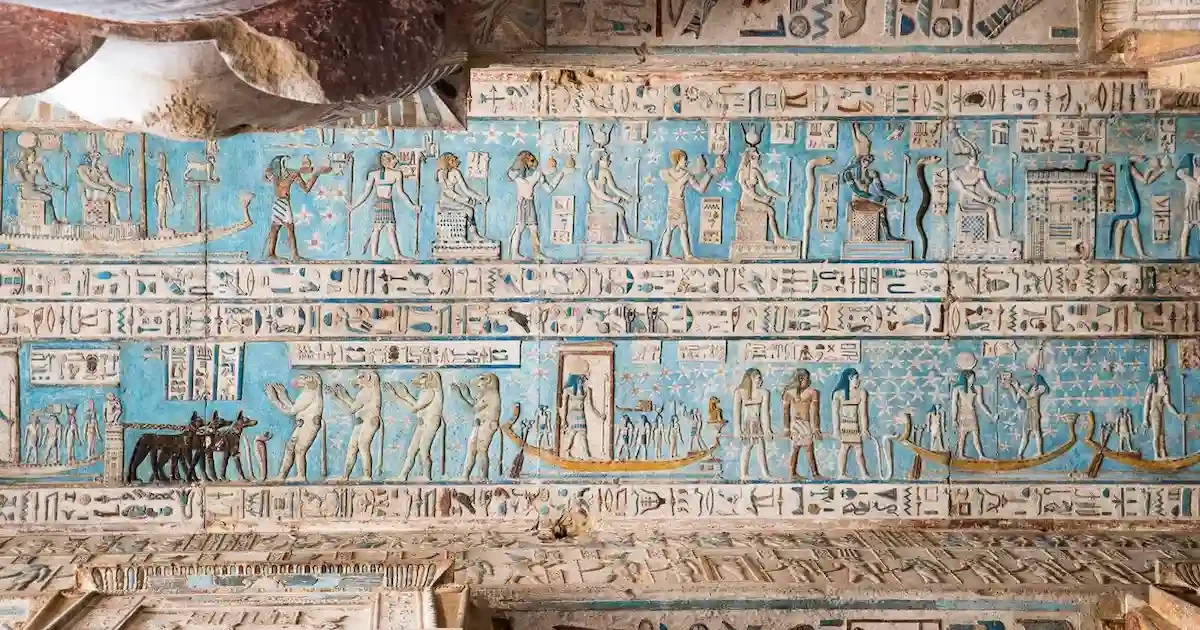
Stand inside the hypostyle hall at Dendera at the right hour of the morning, and you will understand why the ancient Egyptians gave this goddess so many names.
Sunlight slides across dozens of carved faces, each wearing the same serene, cow-horned crown, and for a moment the stone seems to breathe.
This is the beautiful Hathor goddess as her worshippers knew her — not a distant, unreachable deity, but a presence you could feel in music, in laughter, in the warmth of the sun on the Nile.
If you have ever wondered why the beautiful Hathor Egyptian goddess still captivates visitors thousands of years later, this guide will walk you through her myths, her powers, her symbols, and the temples where her spirit still lingers.
Before we dive in, if this kind of history draws you in, our Egypt Tour Packages are built for travelers who want the stories behind the stones, not just the photo stop.
TABLE OF CONTENTS
Who Is Hathor? Meaning and Origins of the Beautiful Egyptian Goddess
The Meaning Behind Her Name
Hathor's Place in the Egyptian Pantheon
Hathor: Goddess of Love, Music, and Beauty
Goddess of Love and Beauty
Goddess of Music, Dance, and Joy
Protector of Women and Motherhood
Beautiful Hathor Goddess Symbols and Their Meaning
The Sacred Cow
The Sistrum
The Sun Disk and Cow Horns
The Beautiful Hathor Goddess Story: Key Myths and Legends
The Eye of Ra and the Destruction of Mankind
Daughter of Ra, Mother of Horus
Temples of Hathor: Where to See Her Legacy in Egypt Today
The Temple of Hathor at Dendera
Hathor's Shrine at Abu Simbel
Other Sacred Sites Along the Nile
Hathor Goddess Art: How the Ancients Portrayed Her
10 Interesting Facts About Hathor
Who Is Hathor? Meaning and Origins of the Beautiful Egyptian Goddess
Long before Isis rose to prominence, Hathor was already one of Egypt's oldest and most beloved deities.
Her worship reaches back to the earliest dynastic period, and some scholars trace her roots to predynastic cow cults that celebrated fertility and the life-giving Nile.
Unlike many gods who were feared, Hathor was adored.
Farmers, queens, miners, and mourners alike turned to her, which is part of what makes the beautiful Hathor goddess story so enduring — she belonged to everyone.
The Meaning Behind Her Name
Hathor's name comes from the ancient Egyptian "Hwt-Hor," commonly translated as "House of Horus" or "Mansion of Horus."
It is a title that hints at cosmic architecture: Horus, the falcon-headed sky god, was believed to dwell within her, and by extension within the sky itself.
This single name captures how the Egyptians thought about the heavens — not as an empty void, but as a living, maternal space.
Hathor's Place in the Egyptian Pantheon
Hathor wore many hats within Egypt's crowded pantheon. She was daughter of the sun god Ra, wife or consort to Horus, and in later periods, a nurturing mother figure to reigning pharaohs.
Her flexibility was rare. Few deities could move between roles — cosmic, royal, and personal — as effortlessly as she did, which is exactly why the beautiful Hathor Egyptian goddess remained relevant for over three thousand years of Egyptian history.
Hathor: Goddess of Love, Music, and Beauty
Ask any Egyptologist to summarize Hathor in one line, and most will land somewhere close to this: she was joy given form.
Her domains stretched across nearly every pleasure ancient Egyptians valued.
Goddess of Love and Beauty
As Hathor goddess of beauty, she governed cosmetics, adornment, and physical charm — Egyptian women prayed to her before applying kohl or perfumed oils.
The Greeks later equated her with Aphrodite, recognizing in Hathor goddess of love and beauty a figure whose power ran through romance, desire, and personal confidence.
Temples dedicated to her often included small shrines where visitors left offerings tied to fertility, marriage, and physical wellbeing.
Goddess of Music, Dance, and Joy
No deity in Egypt was more closely tied to celebration.
As Hathor goddess of love, music, and beauty, she presided over festivals filled with drumming, dancing, and wine.
Her priestesses shook the sistrum, a rattling instrument believed to drive away sorrow and evil spirits.
Temple reliefs frequently show her surrounded by musicians, a reminder that in ancient Egypt, joy itself was considered sacred.
Protector of Women and Motherhood
Beyond romance and celebration, Hathor watched over childbirth and motherhood.
Women called on her during labor, and she was often invoked alongside other protective deities to safeguard both mother and child.
This nurturing side balanced her more festive persona and helps explain her extraordinary popularity across every level of Egyptian society.
Beautiful Hathor Goddess Symbols and Their Meaning
Iconography mattered deeply in ancient Egypt, and Hathor's visual language is among the richest of any deity.
The Sacred Cow
Hathor's most fundamental hathor symbol is the cow, representing nourishment, maternal care, and the life-giving flood of the Nile.
In her earliest depictions, she appears fully as a cow; later, artists blended her into a woman with cow ears or a full bovine headdress.
The Sistrum
The sistrum, a percussion instrument shaken during rituals, belonged almost exclusively to Hathor.
Its rattling sound was thought to please her and repel chaos, and priestesses of her cult carried it as a badge of devotion.
The Sun Disk and Cow Horns
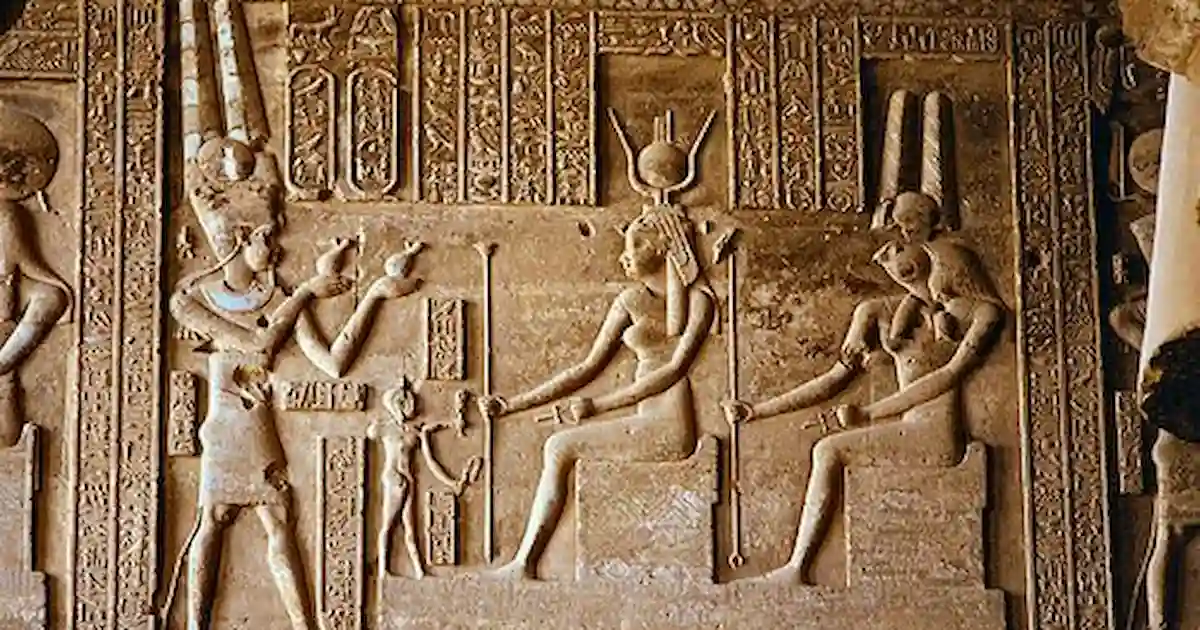
The most recognizable of all beautiful Hathor goddess symbols is her crown: a golden sun disk cradled between two curved cow horns.
This headdress linked her directly to Ra and marked her as a solar deity capable of traveling with the sun across the sky each day.
The Beautiful Hathor Goddess Story: Key Myths and Legends
Hathor's mythology reveals a goddess of contrasts — gentle nurturer on one hand, fierce protector on the other.
The Eye of Ra and the Destruction of Mankind
In one of the most dramatic tales from Egyptian mythology, Ra grew angry at humanity's disobedience and sent Hathor, in her role as the Eye of Ra, to punish them.
She transformed into the lioness Sekhmet and began a rampage so violent that Ra himself had to intervene, tricking her into drinking beer dyed red like blood so she would fall asleep and abandon her fury.
The myth captures both her devastating power and the delicate balance the Egyptians believed existed between destruction and mercy.
Daughter of Ra, Mother of Horus
In gentler tellings, Hathor is Ra's beloved daughter, welcoming him each evening as his solar barge descends into the underworld and greeting him again at dawn.
As consort to Horus, she also became a symbolic mother to Egypt's pharaohs, reinforcing royal legitimacy through her divine motherhood.
These dual roles, cosmic and royal, run through nearly every version of the beautiful Hathor goddess story that survives today.
Temples of Hathor: Where to See Her Legacy in Egypt Today
For travelers, Hathor's mythology becomes tangible the moment you step inside one of her surviving temples.
The Temple of Hathor at Dendera
Dendera Temple, roughly 60 kilometers north of Luxor, is Hathor's grandest surviving sanctuary and one of the best-preserved temple complexes in all of Egypt.
Its ceiling astronomical chart and hauntingly beautiful reliefs of the goddess make it a highlight for anyone tracing her worship firsthand.
Many travelers combine Dendera with a broader itinerary along the river, and our Nile Cruises are designed to include stops exactly like this one.
Hathor's Shrine at Abu Simbel
At Abu Simbel, tucked beside the towering temple of Ramses II, sits a smaller shrine dedicated to Hathor and Queen Nefertari, carved with striking reverence for the goddess of love and beauty. This site forms part of the Nubian Monuments from Abu Simbel to Philae, a UNESCO World Heritage site protected for its extraordinary historical and artistic value. Our Luxor Day Tours make it easy to experience this temple without the logistics headache.
Other Sacred Sites Along the Nile
Smaller shrines and reliefs dedicated to Hathor appear throughout Egypt, from Deir el-Medina near Luxor to sites along the Sinai, once mined for turquoise under her protection as "Lady of Turquoise." Each location adds another layer to understanding how far her cult reached.
Hathor Goddess Art: How the Ancients Portrayed Her
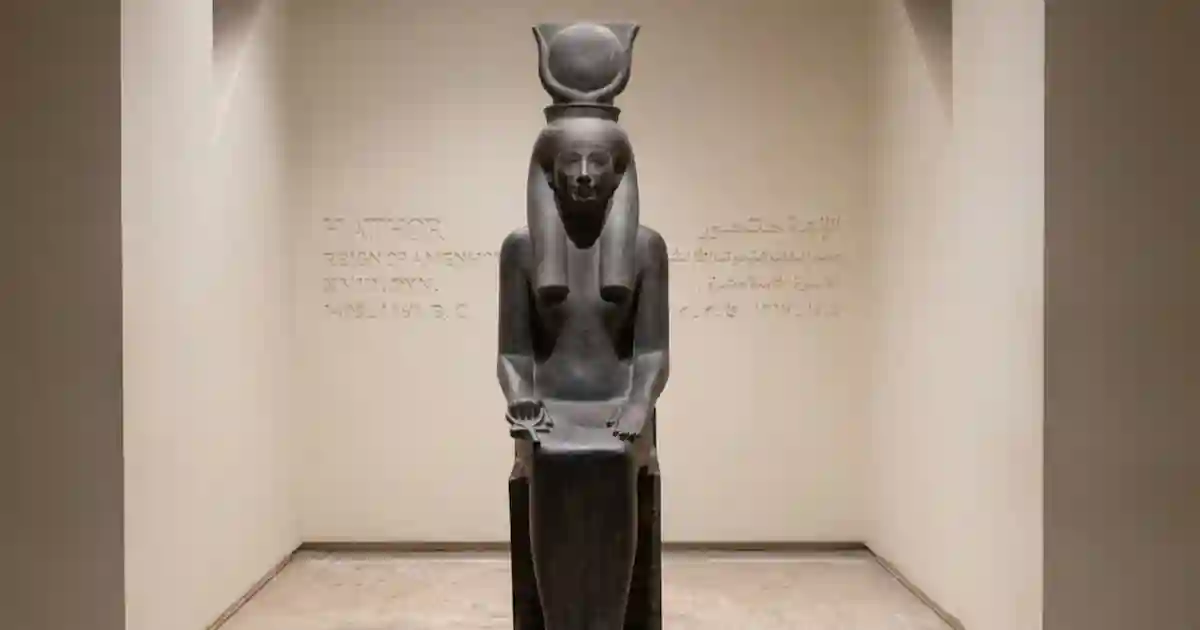
Hathor goddess art spans thousands of years and countless mediums, from monumental temple columns carved with her face on all four sides, to delicate jewelry, mirrors, and cosmetic containers shaped in her likeness.
Artists rarely painted her plainly.
Gold leaf, vivid pigments, and intricate detailing reflected her association with luxury and beauty.
Column capitals shaped like her serene, cow-eared face are among the most photographed architectural features in Egyptian temples, instantly recognizable even to first-time visitors.
10 Interesting Facts About Hathor
Her worship may predate written Egyptian history, rooted in early cow cults.
The Greeks equated her directly with Aphrodite.
She was one of the few deities worshipped by both men and women in nearly equal measure.
Dendera's temple took roughly a century to complete in its final Ptolemaic form.
Her sacred instrument, the sistrum, is still used today in some liturgical music traditions.
She was believed to welcome souls into the afterlife as "Lady of the West."
Miners in the Sinai built shrines to her as patroness of turquoise extraction.
Her cult survived well into the Greco-Roman period, unusually long for an Egyptian deity.
She could appear as a cow, a lioness, a cobra, or even a sycamore tree.
Hathor goddess facts often surprise visitors: despite her gentle reputation, she also carried one of mythology's fiercest destructive powers as the Eye of Ra.
Beautiful Hathor Goddess - FAQ
Who is the beautiful Hathor goddess in Egyptian mythology?
Hathor was one of ancient Egypt's most widely worshipped deities, associated with love, beauty, music, motherhood, and the sky. She was considered the daughter of Ra and often linked with Horus as both his mother and consort.
What does the Hathor symbol represent?
Her core symbols — the cow, the sistrum, and the sun disk between cow horns — represent nourishment, joy, and her connection to the sun god Ra.
Together they mark her as both a maternal and celestial figure.
Where can I see Hathor's temple in Egypt?
The best-preserved temple dedicated to her stands at Dendera, near Luxor, while a smaller shrine sits beside the Great Temple at Abu Simbel.
Both remain open to visitors and are commonly included on Nile itineraries.
Why was Hathor associated with beauty and love?
As Hathor goddess of beauty, she governed cosmetics, adornment, and romantic love, and the Greeks later equated her with Aphrodite.
Egyptian women often prayed to her before rituals involving perfume, jewelry, or marriage.
Is Hathor connected to any UNESCO sites?
Yes. Her shrine at Abu Simbel forms part of the Nubian Monuments from Abu Simbel to Philae, inscribed as a UNESCO World Heritage site for its historical and architectural significance.
Conclusion
Few figures from ancient Egypt capture the imagination quite like Hathor.
She was warmth and fury, beauty and protection, music and motherhood, all folded into one goddess whose temples still draw travelers from across the world.
Understanding her myths, her symbols, and the sites built in her honor turns a simple sightseeing trip into something far more meaningful.
The beautiful Hathor goddess is not just a figure from a textbook; she is a presence you can still stand before at Dendera and Abu Simbel today.
If her story has sparked your curiosity, let us help you plan a journey that brings it to life — explore our Egypt tour options and start mapping your own encounter with the goddess of love, music, and beauty.